
The Ultimate Korea Packing List: Complete Guide

South Korea was part of my month-long Asia trip with my sister in 2025 and one of the best parts of the whole trip. We visited the bustling streets of Seoul, Busan, Jeju Island, Gyeongju, and Incheon. The food was soo good, the public transportation was easy, the people were friendly, and the shopping was some of the best I have experienced in East Asia. South Korea is firmly on my travel bucket list to return to. It is the kind of place that feels like a best friend you want to visit again.
We visited in the fall and the weather conditions were just right. If your travel plans bring you to Korea for the first time, fall is a great time to go. This south korea packing list covers all the travel essentials you need to know about what to bring to Korea, whatever time of year you are visiting.
Planning your next trip? Check out these helpful resources:
🚗🏨Book activities, airport transfers and accommodations in Korea
🏨 Find accommodation for any budget
🎟️ Browse tours, activities, and experiences
🚆 Book trains, buses, and ferries
📱 Get an eSIM for international data
🔒 Protect your data with a VPN
Quick Overview

Season: Fall (September to November)

Trip type: Family trip, part of a longer Asia trip

Cities: Seoul, Busan, Jeju Island, Gyeongju, Incheon

Best tip: Leave extra space in your suitcase. You will shop!

First thing to get on arrival: T-money card and a local SIM card

Biggest mistake: Overpacking clothes. Buy in Korea instead.
South Korea Weather by Season
South Korea has four distinct seasons and what you pack depends on your time of year. Here is a quick overview of weather conditions throughout the year.
Spring (March to May)
Early spring in Korea is still chilly. By April and May the weather is mild and this is when the cherry blossoms bloom, making it one of the most popular times to visit. Pack light layers and a jacket. Average temperatures range from 6 to 17 degrees Celsius. This is a great time to visit if cherry blossoms are on your list.
Summer (June to August)
Korean summers are hot and humid summers. The monsoon rains hit in July making it the wettest month. Humid Korean summers can feel intense if you are not used to humidity. Pack lightweight breathable clothing. Average temperatures reach 25 to 30 degrees Celsius.
Fall (September to November)
Fall is a great time to visit South Korea. September is still warm. October is the sweet spot with average temperatures of 12 to 22 degrees Celsius. November gets cold, dropping to 2 to 7 degrees Celsius at night. Pack layers. The fall foliage is beautiful across all major cities.
Winter (December to February)
Cold winters in Korea are no joke. Winter temperatures drop well below freezing, sometimes as low as minus 10 in Seoul. Pack a heavy coat, thermals, a scarf, gloves, and waterproof boots.
The Complete Korea Packing List
Clothing
The right clothing for Korea depends on when you are going. For fall, pack layers. For summer, pack light. For winter, pack warm. Here is what I recommend for a fall trip.
Tops: Three to four long-sleeved tops and a couple of lighter options. Korean style tends toward neat and put-together so your usual wardrobe works fine. You do not need to dress for Korean style specifically but know that locals dress well.
Bottoms: Two to three pairs of comfortable trousers or jeans. You will do a lot of walking so comfort comes first.
Sweaters: Two good sweaters for layering. These also double as layers on flights.
Jacket or coat: A mid-weight jacket for October. Something warmer for November. A trench coat is practical and fits the Korean autumn look well.
Pairs of shoes: Bring two pairs minimum. One comfortable pair of walking shoes for long days and one slightly smarter option for evenings. For November, a pair of boots, ideally waterproof boots, is a good idea.
Important note for women: if you have large feet or large-sized female shoes, Korean and Asian sizes run small. If you wear a US size 9 or above you will struggle to find shoes in Korea. Bring shoes from home.
Dress code note: Korea is not conservative but temples and palaces require covered shoulders and knees. A light layer in your day bag solves this easily.
Capsule wardrobe tip: A capsule wardrobe of versatile pieces that mix and match is the smartest approach for a longer Asia trip. Pack less and plan to do laundry or buy things in Korea.
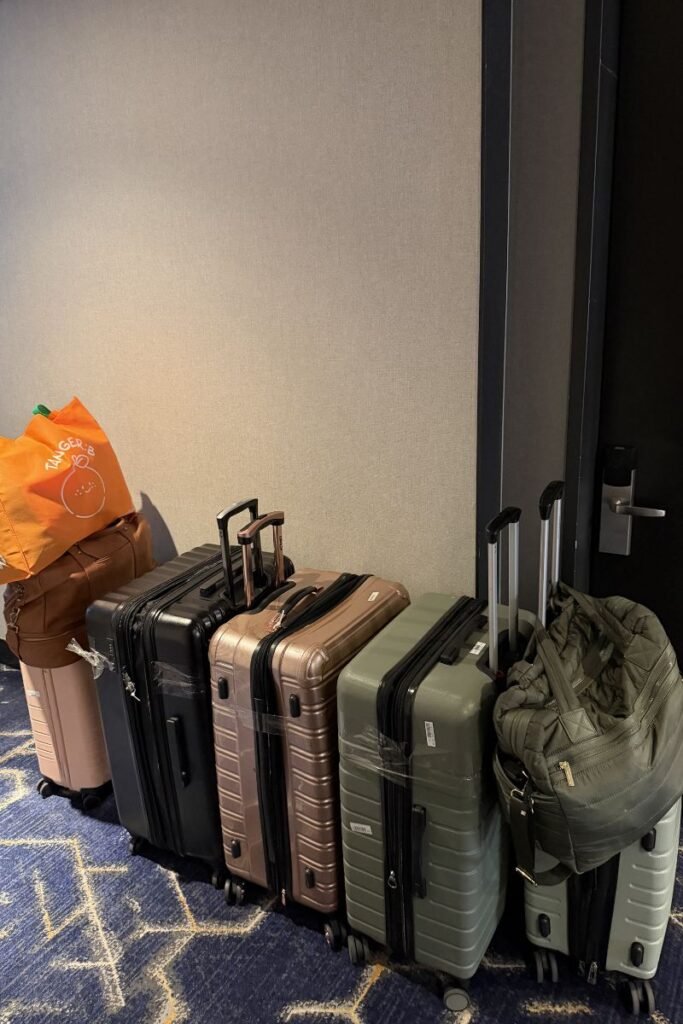
Shopping tip: Leave extra space in your suitcase. The biggest mistake most travellers (including me) make is overpacking clothes and having no room for what they buy. Dongdaemun, Myeongdong, and Hongdae all have great stuff at good prices. I had to buy an extra suitcase.
Toiletries and Personal Items
Korea is the beauty capital of the world. Do not overpack toiletries. You will find better products at lower prices in Korean pharmacies and beauty stores than you brought from home.
Olive Young is the main pharmacy and beauty chain in Korea. It is like a Korean Sephora and you will find one on almost every main street in the major cities. There are a lot of fun inexpensive beauty brands here that you will not find at home. Budget time and money for it.
Korean skincare is genuinely some of the best in the world. Sheet masks, serums, sunscreen, and toners are all worth buying in Korea. Leave room in your suitcase for your K-beauty haul.
Sunscreen: Bring some from home but also buy Korean sunscreen when you arrive. It is lightweight and non-greasy.
Lip balm: Pack your own. A personal item but easy to forget and useful for the cooler fall weather.
Shampoo and conditioner: Hotels provide these but quality varies. Bring a small amount if you are particular. For those with long hair, Korean hotel dryers can be weak so factor that in.
Prescription medications: Bring any prescription medications with documentation from your home country. Carry enough for your full trip plus a few extra days. Some medications are restricted in Korea so check before you travel.
Hand sanitizer: Useful for public toilets in tourist areas and local markets. Not all public toilets in Korea have soap.
Toilet paper: Most tourist areas and convenience stores have it but worth keeping a small pack in your day bag for local markets and rural areas.
Reusable water bottle: Tap water in Korea is technically safe to drink but most locals and tourists buy bottled water. A reusable water bottle is a good idea for day trips and reduces plastic waste.
Food allergies: If you have food allergies or special dietary needs, carry a card in Korean explaining your restrictions. Many local market stalls and small restaurants do not have English menus.
Electronics and Tech
South Korea uses Type C and Type F round pin plugs at 220 volts. Canadians and Americans will need a plug adapter. A universal travel adapter is the only thing you need if you are travelling across multiple Asian countries since Japan and Taiwan use different plugs again.
Mobile phones: Make sure your phone is unlocked before you travel. Korean SIM cards will not work in a locked phone. If you are from the US or Canada, check with your carrier.
SIM card or eSIM: Get a Korean SIM card on arrival at Incheon Airport. Pre-ordering online is cheaper and faster than buying at the counter. An LG U+ SIM is a popular choice and comes with a T-money card included. This is the first thing I would sort on arrival. I used an eSim
Essential Korean phone apps to download before you go: Naver Maps (navigation, works much better than Google Maps in Korea), Papago (translation app), Kakao T (taxis). Download offline versions where possible.
Portable charger: You will use your mobile phone all day for navigation, photos, and translation. A portable charger is essential.
Camera: South Korea is photogenic. Jeju Island, Gyeongju, and the streets of Seoul all reward a good camera.
Documents and Money
Travel documents to bring: passport (valid for at least 6 months), travel insurance documents, airline confirmations, accommodation bookings. Keep digital copies on your phone as backup.
Travel insurance: Essential. Make sure your policy covers all countries on your trip and the full duration. This is especially important for a multi-country trip.
Visa: Canadians can enter Korea visa-free for tourism. Check the requirements for your home country before travelling. Some nationalities also need a K-ETA (Korean Electronic Travel Authorisation) so check this in advance.
T-money card: The most important travel essential for getting around Korea. It is a rechargeable card that works on subways, buses, and taxis across Seoul, Busan, Incheon, and Jeju Island. Buy it at any convenience store for around 4,000 South Korean won. Top it up at subway vending machines.
Local currency: Have some South Korean won in cash. Credit cards are widely accepted at department stores, hotels, and larger restaurants but local markets, street food stalls, and smaller shops in rural areas often prefer cash. Namdaemun Market is a good example.
Dollar bills: You will not need US dollar bills in Korea. Exchange to South Korean won before you go or use ATMs on arrival. You do not need to bring much money in cash if you have a working foreign card. Avoid exchanging at the airport if you can as rates are worse.
Credit cards: Notify your bank before travelling. Visa and Mastercard are widely accepted. Some smaller shops may charge an additional cost for card payments.
ATMs: 7-Eleven and GS25 convenience store ATMs generally accept foreign cards. Many Korean bank ATMs do not.
Bags
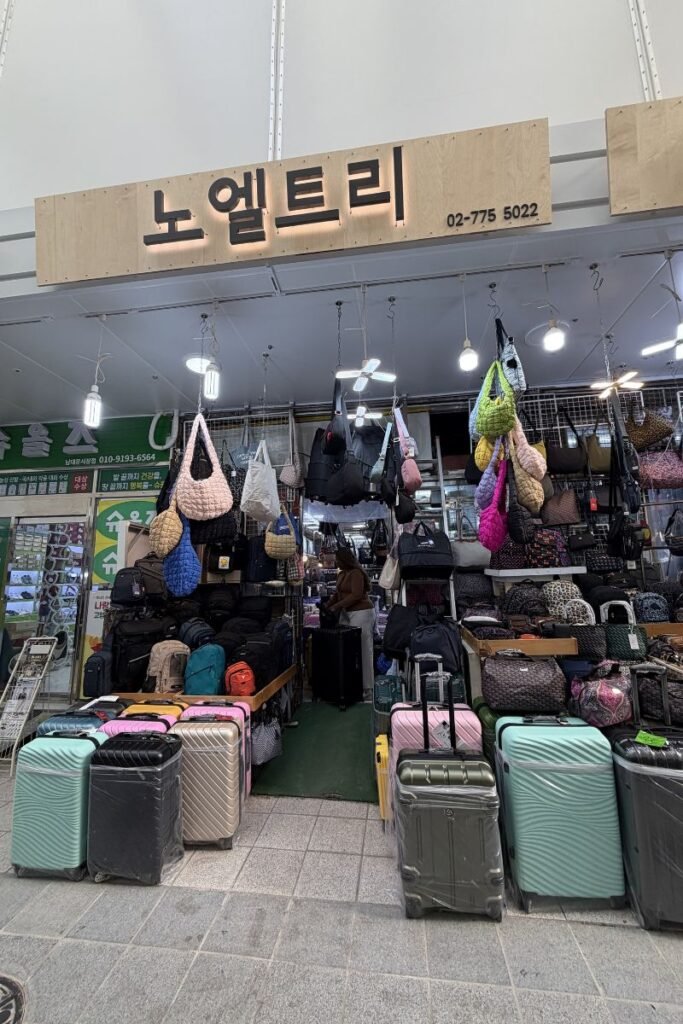
Main suitcase: A full suitcase works well for a longer trip but leave extra space for shopping. This is part of Korea you absolutely cannot skip. I ended up buying an extra suitcase for all the shopping from the store (in the image below), the owner was super friendly and kind plus the suitcase was affordable for the size I got
Day bag: A comfortable backpack is better than a shoulder bag for long days of walking. You will carry it everywhere.
Reusable bags: Bring a couple of reusable bags for markets and shopping. Many stores charge for plastic bags.
Shopping in South Korea
Korea’s shopping is some of the best in East Asia. We visited Myeongdong, Hongdae, Namdaemun Market, COEX Mall, and Dongdaemun and all were worth the visit.
Myeongdong is the main shopping area in Seoul. Great for beauty products, Korean skincare, and fashion. Busy and lively with street food throughout.
Hongdae is the indie creative area. Independent boutiques, vintage clothing, and a younger local crowd. Good for unique finds.
Namdaemun Market is one of the oldest local markets in Korea. Clothing, accessories, street food, and household goods at low prices. Cash is useful here.
COEX Mall is a large underground mall in Gangnam. Good for a rainy day and has the famous Starfield Library inside.
Dongdaemun is the fashion district. Known for online shopping for wholesale and retail fashion. The area is busiest late at night and the DDP building nearby is worth seeing.
Home Plus is a large Korean supermarket chain that is also worth visiting for local food, snacks, and everyday items at good prices.
Asian sizes: Clothing in Korea runs smaller than North American sizing. For larger builds or large feet, buying clothes before you go or via online shopping before your trip is a good idea. Large-sized female shoes especially are hard to find in Korean and Asian sizes beyond a certain point.
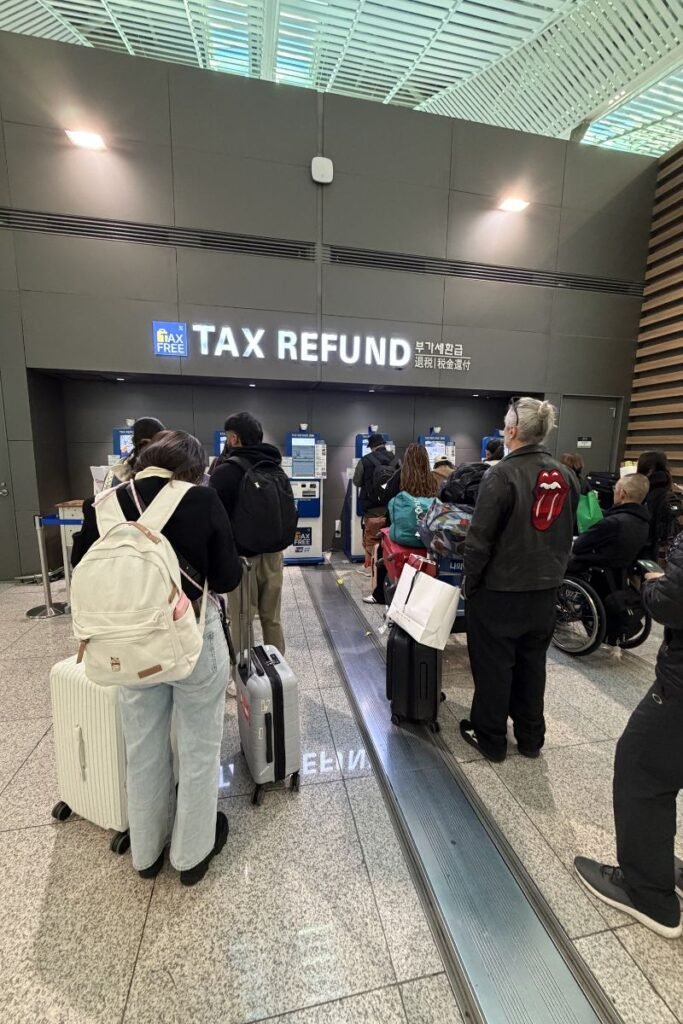
Tax refund: Tourists are eligible for tax refunds on purchases over a certain amount. Look for the tax refund signs and keep receipts.
South Korea Travel Tips
Public transportation is excellent. The subway in Seoul is one of the best in the world. Clean, frequent, and well-signed in English. Your T-money card covers buses and subways across all major cities.
Shoes off culture: You will remove your shoes at temples, some traditional restaurants, and some accommodation. Make sure your socks are in good condition.
A lot of walking: You will walk more than you expect. Comfortable shoes are the most important thing on this entire packing list. Do not break in new shoes in Korea.
Tap water: Technically safe to drink in Korea but most people drink bottled water. Bring a reusable water bottle and refill at your hotel.
Convenience stores: GS25, CU, and 7-Eleven are everywhere and genuinely good. Hot food, snacks, drinks, and everyday personal items are all available cheaply. They are also where you top up your T-money card.
Rainy season: The monsoon rains hit in July. If you are visiting in summer pack a light rain jacket. For fall visits the weather is generally dry but a small fold-up umbrella is worth having.
Food allergies and special dietary needs: Carry a card in Korean if you have allergies. Some restaurants have limited English and cross-contamination is common in Korean cooking.
Cherry blossoms: If cherry blossoms are on your list, visit in early spring, late March to April. It is one of the best times to visit South Korea.
Cultural differences: Koreans are generally formal and polite. Speak quietly in restaurants and on public transport. Tipping is not customary in Korea.
Best tips for first time visitors: Get your T-money card first, download Naver Maps before you arrive, and leave room in your suitcase for shopping.
What Not to Pack
Too many clothes: The biggest mistake. Pack a capsule wardrobe and buy what you need in Korea. Clothing is good quality and affordable.
Excessive toiletries: Korea has everything and better. Leave room for Olive Young hauls.
Large-sized female shoes: If you have large feet and wear a US size 9 or above, shoes in Korean and Asian sizes will be hard to find. Bring shoes from home.
Dollar bills: No need. Use South Korean won.
A full-size umbrella: Buy a small one for a dollar at a convenience store if you need it.
Final Thoughts on This Korea Packing List
South Korea is one of the best places I have visited in East Asia. The food, the culture, the shopping, and the history are some of the best things about Korea and make it a great place for a first time visit or a return trip.
Packing smart means less stress and more room for what you buy. Keep it simple, bring comfortable shoes, get your T-money card on arrival, and enjoy every minute.
This packing guide and complete korea packing list covers a week trip or longer. If you are planning a shorter visit or a specific part of Korea, the same essentials apply.
More Travel Guides
Tulum Packing List
Adventurous Things to Do in Ontario
Things to Do in Bayfield Ontario
Banff National Park Itinerary
Ontario Road Trips