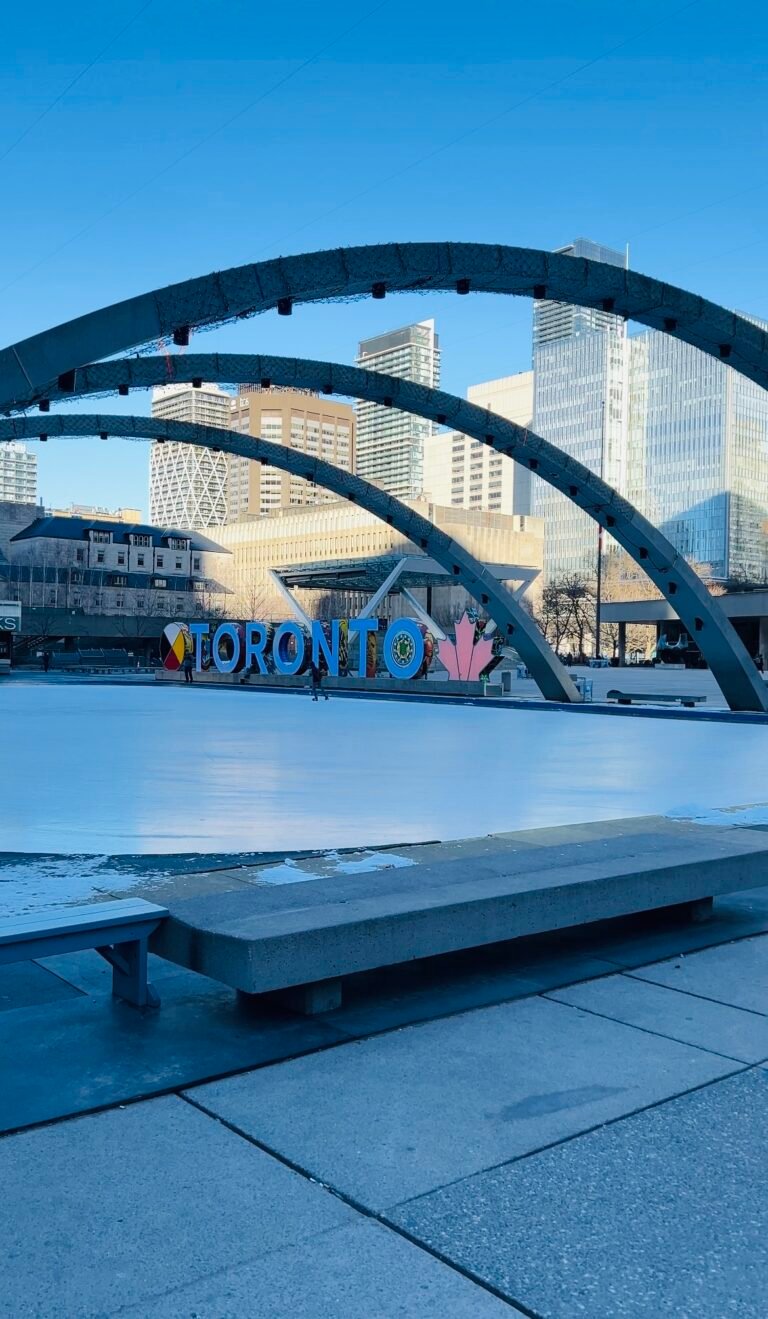
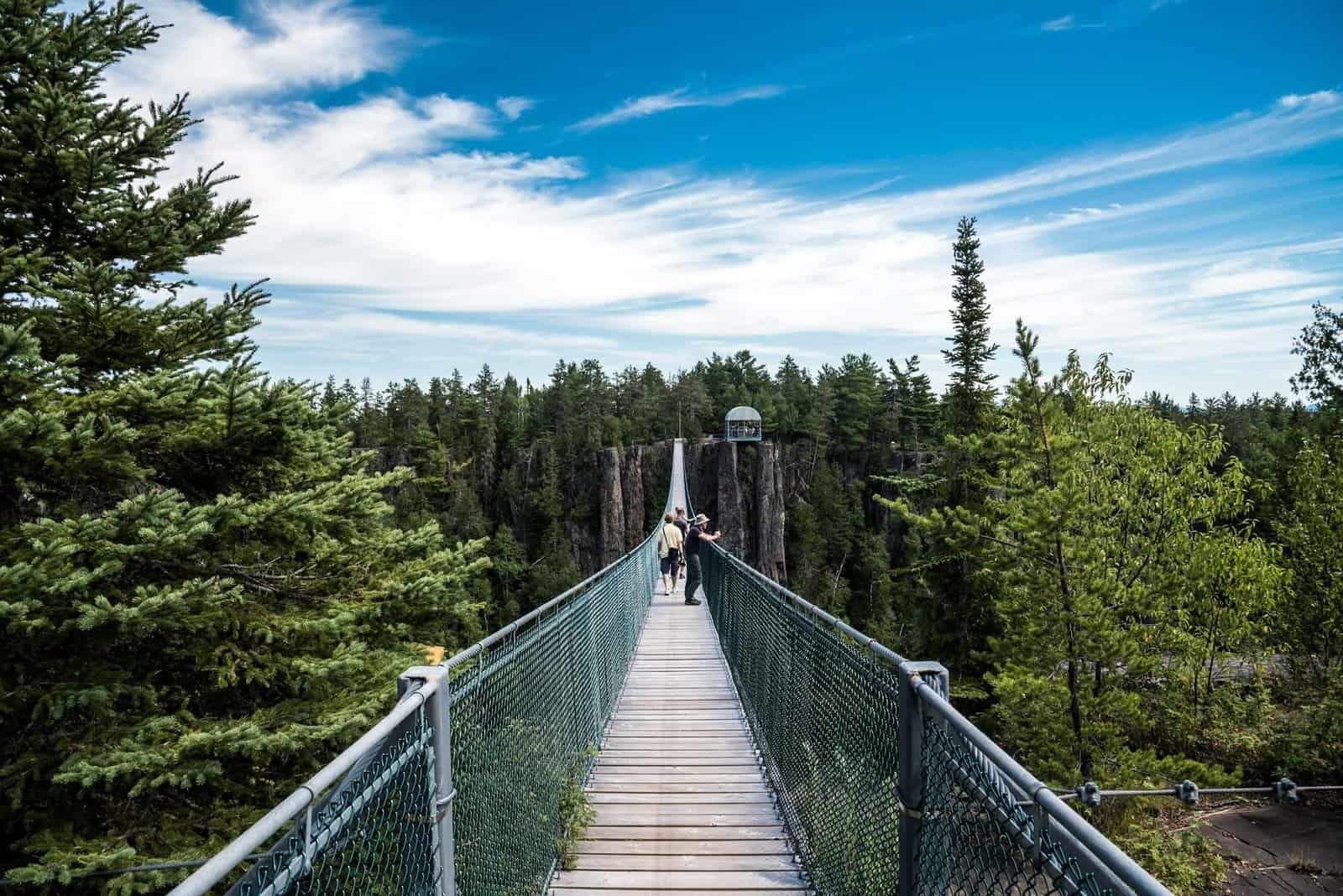
30+ Best Fun Outdoor Adventurous Things To Do In Ontario

30+ adventurous things to do in Ontario Canada, from someone who actually lives here
I have lived in Toronto, Ontario for over 7 years and and I still feel like I am only scratching the surface of all the adventurous things to do in Ontario. It is genuinely massive. It stretches from the shores of Lake Ontario in the south all the way to the Hudson Bay coast in the north and Ontario Canada is a great place to explore no matter what kind of trip you are planning. It has everything from big cities and small towns to vast wilderness and freshwater lakes that could take a lifetime to explore properly.
I have canoed through Algonquin Park with friends, done the Island Queen boat cruise in Georgian Bay, hiked out to Flowerpot Island on the Bruce Peninsula with my fam, walked the Rideau Canal path in Ottawa, and done Niagara Falls more times than I can count. Every single time I think I have seen the best of it, Ontario surprises me all over again.
Whether you are based here like me or planning your next trip from elsewhere, this is my honest guide to the most adventurous things to do in Ontario. It covers outdoor adventures in Ontario across all four regions of the province. I have included things I have done personally, things on my bucket list, and everything in between. There is genuinely something here for every skill level, every season, and every type of trip, and plenty of unforgettable experiences you won’t find anywhere else in Canada.
Before You Go: Understanding Ontario’s Regions
Ontario is a big province with diverse regions and it helps to understand them before you plan. Southern Ontario is the most densely populated and most visited part of the province. It covers the Greater Toronto Area, the Niagara Peninsula, the Niagara Escarpment, Collingwood and Georgian Bay, Muskoka cottage country, and the southwestern agricultural heartland.
Central Ontario sits between southern and northern Ontario. This is where you find Algonquin Provincial Park, Manitoulin Island in Lake Huron, and the transition zone between the agricultural south and the Canadian Shield wilderness of the north.
Eastern Ontario covers Ottawa and the surrounding region, the Ottawa Valley, Kingston, the Thousand Islands on the St. Lawrence River, and Prince Edward County on the shores of Lake Ontario. Ottawa is the capital of Canada and sits on the Quebec border in the east of the province, not the south.
Northern Ontario is vast and wild. It stretches from Sudbury and Sault Ste. Marie in the south of the region all the way to Thunder Bay and the Hudson Bay coast. Algonquin Park is sometimes associated with northern Ontario because of its wilderness character, but it technically sits in Central Ontario near the eastern edge of the province.
Ontario’s weather patterns vary significantly across these regions. Summer is the most popular time for outdoor activities across the province. Late summer into fall is one of the best times to visit, particularly for fall colours in Algonquin and Muskoka. The cooler months bring cross-country skiing, fat biking, and the possibility of seeing the aurora borealis. Spring is quieter with powerful waterfalls from snowmelt.
Ontario is the traditional territory of many First Nations peoples. The Anishinabek Nation, the Haudenosaunee Confederacy, the Cree Nation, and many other first peoples of these lands have been stewards of this territory for thousands of years. As you travel through Ontario’s parks and landscapes you are moving through Indigenous homelands with deep histories and living cultures.
Southern Ontario Adventures
Southern Ontario is where most visitors start and honestly where I spend most of my own time exploring. It is the most accessible region from the Greater Toronto Area and has a huge range of outdoor adventures in Ontario within a short drive. Here are the most adventurous things to do in Ontario’s south based on my own experience. Many are easy Ontario day trips from Toronto, and several are worth a full weekend away.
1. Experience Niagara Falls
Niagara Falls is one of those places I have been to so many times that it is basically my go-to spot whenever friends or family visit from out of town. I always take people here and it never gets old. Photos genuinely do not prepare you for the scale and power of it. Horseshoe Falls on the Canadian side plunges 57 metres and stretches more than 670 metres wide. The mist hits you from a distance and when you finally see the full drop it stops you in your tracks.
I have done Niagara City Cruises, Journey Behind the Falls, and the Whirlpool Jet Boat Tour on the Niagara River. All three are worth doing. The boat cruise gets you absolutely soaked, which is part of the fun. Journey Behind the Falls is something most people skip but shouldn’t. Going into the bedrock and looking out through the actual waterfall is a completely different experience from watching it from the outside. And the jet boat tour on the Niagara River is genuinely one of the most thrilling things I have done in Ontario. I check out my other Niagara Falls guides for more detail on everything there is to do.
For anyone who hasn’t been to Niagara Falls yet, I would say at minimum do the boat cruise and Journey Behind the Falls on your first visit. Budget at least a full day and consider staying overnight to see the falls lit up at night.
Cost: Niagara City Cruises ~$30 CAD adults. Journey Behind the Falls ~$25 CAD. Jet boat tour ~$75 CAD.
Best time: Late summer is lovely but the falls run year-round. Winter is surprisingly beautiful with ice formations along the Niagara River.
2. Blue Mountain and Collingwood
Blue Mountain in Collingwood is one of Ontario’s most versatile outdoor adventure destinations and I have spent time there in winter. About 2 hours north of Toronto, it is a great spot for an Ontario day trip or a full weekend away. I went in winter and absolutely loved it. I still need to go back in summer for the treetop trekking and mountain biking, which is firmly on my list.
In winter, Blue Mountain is the best skiing and snowboarding in Ontario. The resort hosts World Cup snowboarding events and the terrain park is excellent. You don’t need to head to a Rocky Mountain resort for a great ski trip in Canada. The village at the base of the mountain has a lovely atmosphere with restaurants and shops right there, making it easy to do a proper ski weekend without going far.
In summer it becomes a full adventure playground. The treetop trekking course includes a long suspension bridge, a full obstacle course through the forest canopy, and finishes with a 300 and 1000-foot zip line over the trees. The Scenic Caves nearby offers a 70-foot descent through 17 cave formations. I haven’t done the summer activities yet but from everything I have heard it is a brilliant full-day adventure just 2 hours from Toronto.
Mountain biking at Blue Mountain in summer is also excellent, with trails for all skill levels from beginner to black diamond.
Distance from Toronto: About 2 hours north on Highway 26 through Barrie.
Best time: Cooler months for skiing; summer for treetop trekking, zip lines, and mountain bike trails.
3. Hike the Bruce Peninsula and Tobermory
I have done this trip a few times with my partner and it is one of my absolute favourites in Ontario. The Bruce Peninsula stretches about 100 kilometres into Lake Huron, with Georgian Bay on one side and the main lake on the other. The scenery is completely unlike anything else in southern Ontario, with dramatic limestone cliffs, crystal clear water, and old-growth cedar forest along the Niagara Escarpment.
The Grotto inside Bruce Peninsula National Park absolutely blew me away. It is a limestone sea cave filled with water that goes from turquoise to deep teal and the water colour is genuinely unreal. I would go back just for that alone. Book your permit in advance through Parks Canada, especially for summer.
At the tip of the peninsula is Tobermory, gateway to Fathom Five National Marine Park. I hiked out to Flowerpot Island on a day tour with my partner and it was lovely. The island is quiet and peaceful in a way the main peninsula isn’t and the famous sea stack formations called the flowerpots are genuinely impressive. The boat tour out there also passes over several historic shipwrecks which you can see through the clear water. Fathom Five has over 20 shipwrecks and is considered one of the best freshwater diving destinations in the world.
The Bruce Trail runs the entire length of the peninsula, 900 kilometres from Niagara Falls to Tobermory, following the UNESCO World Heritage Site Niagara Escarpment. You can hike a short section in a day or tackle it piece by piece over multiple trips.
Getting there: Tobermory is about 3.5 hours from Toronto. Worth making it a 2-night trip.
Booking: Grotto permits through the Parks Canada reservation system. Book well in advance for summer.
4. Kayaking and Exploring Georgian Bay
Georgian Bay is one of my favourite places in Ontario. I did the Island Queen boat cruise out of Parry Sound and I have also spent the day on Beausoleil Island, which was a brilliant day. The island is quiet, lovely for hiking, and has that beautiful pink granite Canadian Shield landscape that makes Georgian Bay so distinctive. Swimming in those clear freshwater lakes surrounded by granite rock is one of my favourite Ontario experiences.
The 30,000 Islands area north of Parry Sound is the world’s largest freshwater archipelago. Georgian Bay Islands National Park sits within this island chain and can only be accessed by boat. The Island Queen cruise out of Parry Sound was a great way to see the scale of the islands and Beausoleil Island specifically is worth spending a full day on. I would go back without hesitation.
For those looking to learn to scuba dive, Georgian Bay and the waters near Tobermory offer really good freshwater diving. The visibility is excellent and the historic shipwrecks in the area are fascinating.
Best time: July and August for kayaking and swimming. Fall cruises are gorgeous with the colour change as a backdrop.
5. Niagara Escarpment: Rock Climbing, Waterfalls, and the Bruce Trail
The Niagara Escarpment is a UNESCO World Heritage Biosphere that spans nearly 1,900 square kilometres and runs from Niagara Falls north through the Bruce Peninsula. It is one of Ontario’s most dramatic natural features and one of the great outdoor adventure corridors in southern Ontario.
Hamilton, which sits on the escarpment just west of Toronto, is known as the waterfall capital of the world with over 150 waterfalls along the escarpment edge. Chasing waterfalls here is a great day trip from Toronto, with options like Albion Falls and Devil’s Punch Bowl.
The escarpment also has excellent rock climbing. Rattlesnake Point, Metcalf Rock, Mount Nemo, and Lion’s Head are all popular climbing spots for different skill levels. Niagara Glen is great for bouldering along the Niagara River. If you are new to climbing, starting at an indoor gym in Toronto before taking an outdoor course is a great way to learn.
The Bruce Trail follows the escarpment for its entire length. At 900 kilometres it is Canada’s oldest and longest marked hiking trail. You do not need to hike the whole thing at once. Many people tackle a section at a time, picking up where they left off on each trip.
Best time: Spring and fall for hiking. Spring for waterfalls. Summer can be hot on the rock face for climbing.
6. Muskoka: Cottage Country
Muskoka is Ontario’s cottage country and it earns that reputation completely. About 2 hours north of Toronto from the Greater Toronto Area, the region has over 1,600 lakes, pink granite Canadian Shield landscape, and some of the most beautiful small towns in the province, including Gravenhurst, Bracebridge, and Huntsville.
In summer the lakes are brilliant for swimming, boating, and paddleboarding. Fall in Muskoka is arguably even better. The colours are absolutely gorgeous and scenic drives through the region in September and October are some of the best fall colour experiences in Ontario. Winter brings cross-country skiing, snowshoeing, and winter festivals.
Best time: Late September for fall colours. Summer for lake activities.
Day trip or overnight: 2 hours from Toronto, ideal for an Ontario day trip or a long weekend.
7. CN Tower EdgeWalk and Downtown Toronto
I live in Toronto and even though I see the CN Tower from various angles every other day, it still impresses me. Standing over 553 metres tall, the views from the observation deck across the Greater Toronto Area and out over the shores of Lake Ontario on a clear day are really impressive.
The EdgeWalk is the real adventure. At 356 metres above the ground, harnessed onto a cable, you walk around the outside of the CN Tower on a five-foot ledge. You are encouraged to lean out over the city. It is the world’s highest hands-free outdoor walk and it is genuinely terrifying in the best possible way. I haven’t done this yet but my friends did this and still talk about it.
Downtown Toronto has plenty more to explore. Casa Loma is a castle in North America worth talking about, with nearly 100 rooms, secret passageways, tunnels, and towers built in the early 20th century. The Royal Ontario Museum is one of the top 10 cultural institutions in North America with 13 million pieces in its collection. The waterfront along the shores of Lake Ontario is lovely for a walk with spectacular views back to the CN Tower.
EdgeWalk: Book in advance at cntower.ca. The walk takes about 30 minutes.
8. Mountain Biking and Fat Biking
Mountain biking in Ontario is excellent and often overlooked by people who assume you need mountains in the western sense to have great trails. Hardwood Hills north of Barrie is one of the best places to learn mountain biking in Ontario, with trails for all skill levels from beginner to expert. Blue Mountain offers downhill mountain biking in summer on the ski runs.
Fat biking in the cooler months is something I would really recommend trying. Riding wide-tired bikes through snow-covered trails is a completely different experience from summer biking and it has become increasingly popular across Ontario’s provincial parks and trail networks. It is one of those new winter fun activities that gets you outside when most people stay in.
Best trails: Hardwood Hills near Barrie, Blue Mountain in Collingwood, Albion Hills in Peel Region, Don Valley in Toronto.
9. Point Pelee National Park
Point Pelee is one of the smallest but most ecologically significant national parks in Canada. It sits at the southernmost point of mainland Canada, further south than northern California, on a peninsula jutting into Lake Erie in southwestern Ontario. Over 390 bird species have been recorded here, making it one of the best birding destinations in North America.
The Marsh Boardwalk trail through the wetlands is one of the best nature trails in Ontario. Point Pelee is also a designated Dark Sky Preserve, making it an excellent spot for stargazing and aurora borealis viewing away from urban light pollution.
Best time: May for spring bird migration and September for fall migration.
10. Grand River Paddling
The Grand River runs through southwestern Ontario and is one of those local adventures that people living nearby often take for granted. From kayaking through the dramatic Elora Gorge to paddling the gentler stretches between Glen Morris and Paris, the river offers different experiences for different skill levels.
Elora Gorge is genuinely impressive. The river has cut a dramatic canyon through the limestone and there is great tubing and kayaking here in summer. Paris, Ontario along the Grand River is a lovely small town for a lunch stop on a paddling day.
11. Cross-Country Skiing and Winter Trails
Ontario has really good cross-country skiing and you do not have to travel far from the Greater Toronto Area. Hardwood Ski and Bike north of Barrie is one of the top Nordic centres in Ontario with over 100km of groomed trails. In winter many sections of the Trans Canada Trail are groomed for cross-country skiing and snowshoeing, passing through forests, along rivers, and through small towns.
Best time: January and February for the most reliable snow conditions.
Central Ontario Adventures
Central Ontario sits between the populated south and the remote north. It has some of the most adventurous things to do in Ontario, including, including Algonquin Provincial Park and Manitoulin Island.
12. Canoe Trip Through Algonquin Provincial Park
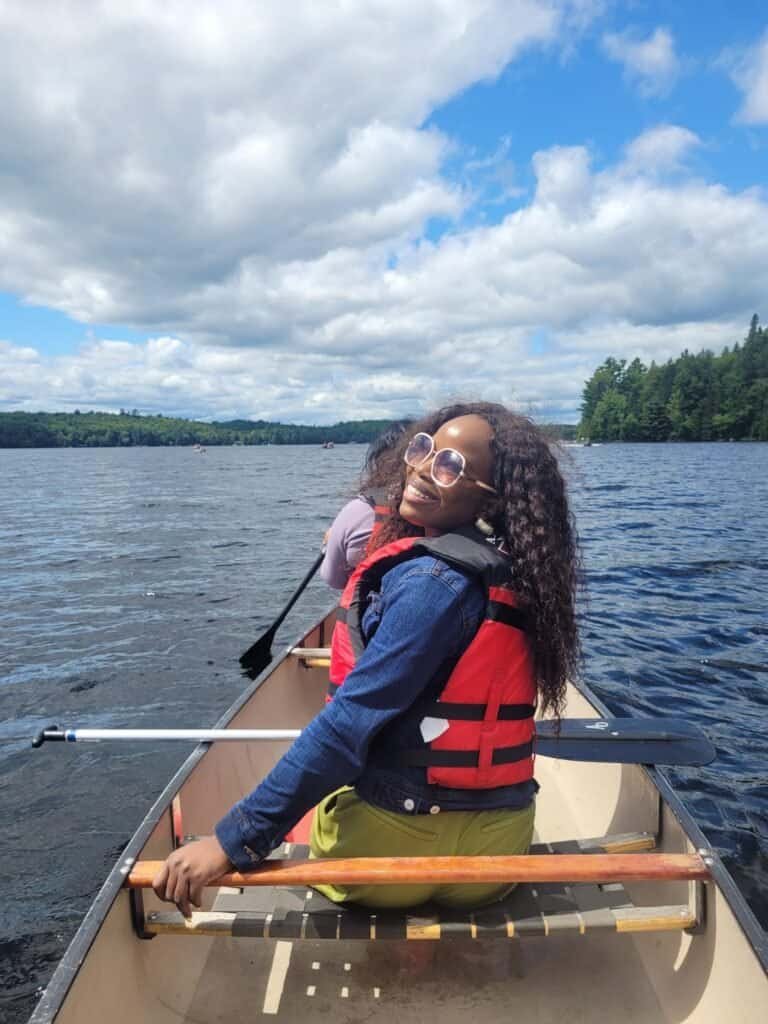
Algonquin Provincial Park is one of my favourite places in all of Ontario. I have done a canoe trip through the park with friends using Algonquin Outfitters and it is the kind of experience I would do again in a heartbeat. There is something about paddling into the backcountry, setting up camp on a lake you have entirely to yourself, and waking up to absolute silence that genuinely resets you. No phone, no noise, just the sound of loons across the water.
Algonquin is the oldest provincial park in Canada and has over 2,000 kilometres of canoe routes ranging from easy single-day paddles to week-long multi-lake expeditions. For first-timers I would say a two to three night trip is the sweet spot. Long enough to get deep into the backcountry, not so long it becomes too much. We used Algonquin Outfitters for our gear and they were great.

Even if canoeing isn’t your thing, the Highway 60 corridor through the park has excellent day hike trailheads including the Centennial Ridges Trail, Lookout Trail, and Spruce Bog Boardwalk. Fall is absolutely gorgeous in Algonquin. The park turns every shade of red, orange, and gold and moose are more active in the cooler months.
Algonquin is also one of the best places in Ontario to spot wildlife. Moose, black bears, wolves, beavers, and loons are all common. Heading out at dusk in a canoe on an interior lake and hearing a wolf howl across the water is one of those experiences that stays with you.
Canoe rental: Algonquin Outfitters and Voyageur Quest both offer gear rental and guided canoe trip packages.
Best time: Late June through September for paddling. Fall for day hiking and fall colours.
Location: Algonquin Park sits in Central Ontario, about 3 hours northeast of Toronto and a short drive of 3 hours west of Ottawa.
13. Manitoulin Island
Manitoulin Island is the largest freshwater island in the world and it sits in Lake Huron north of the Bruce Peninsula. It is a place unlike anywhere else in Ontario, wild, deeply connected to Anishinabek Nation culture and history, and home to over 100 inland lakes within the island itself.
The Cup and Saucer Trail is the main hiking highlight, a 6-kilometre loop that takes you up and across the Niagara Escarpment with brilliant views and an adventurous wooden staircase section. Indigenous cultural experiences, guided hikes, and culinary experiences are available through local operators and offer genuinely meaningful ways to engage with the first peoples of these lands.
Getting there: By ferry from Tobermory in summer on the Chi-Cheemaun ferry, or by road year-round from Espanola near Sudbury.
14. Aurora Borealis Viewing
Seeing the northern lights in Ontario is more achievable than most people realise. While Wabakimi Provincial Park and northwestern Ontario offer the most dramatic displays, there are great aurora viewing spots in Central Ontario too.
Some of the best places to see the aurora borealis in Ontario include Algonquin Provincial Park, Manitoulin Island, Muskoka, and northeastern Ontario. Dark sky preserves like Point Pelee offer excellent conditions further south. The key is getting away from light pollution and having clear skies during periods of high solar activity.
Best time: September through March. Clear and cold nights with high solar activity give the best displays.
Tip: Apps like My Aurora Forecast will alert you when conditions are good in your area.
Eastern Ontario Adventures
Eastern Ontario covers Ottawa and the surrounding region, the Ottawa Valley, Kingston, the Thousand Islands on the St. Lawrence River, and Prince Edward County on Lake Ontario. This region is often overlooked by visitors heading straight to the northern wilderness or Toronto, but it has some of the best outdoor adventures and most interesting history in the province.
15. Ottawa: Parliament Hill, the Rideau Canal, and the Ottawa Valley
Ottawa is genuinely one of my favourite cities in Canada and I think it is underrated compared to Toronto. It is the capital of Canada and sits in eastern Ontario on the Quebec border. It has a completely different character from Toronto and I always enjoy visiting.
Walking up to Parliament Hill was one of those moments that genuinely stopped me. The Gothic revival buildings sitting above the Ottawa River are so impressive in person and the views over the river are dramatic. Free guided tours of the Senate and House of Commons run regularly and are worth doing. Parliament Hill also hosts great events including the Winter Lights display in December and Canada Day celebrations on July 1st with live music and one of the best fireworks displays in the country.
The Rideau Canal runs 202 kilometres from Ottawa down to Kingston and is a UNESCO World Heritage Site. I walked a good stretch of the canal path in Ottawa and loved it. It is one of those places that is beautiful in every season. In summer the 100 percent electric boat cruises along the canal are excellent, with commentary covering the fascinating history of a waterway that took six years to build in the 1820s.
In winter the 7.8 kilometre stretch of the Rideau Canal in Ottawa freezes over to become the world’s largest naturally frozen skating rink. Skating it is a genuine bucket list experience. During Winterlude in February there are BeaverTails stands along the way, ice sculptures, and events throughout the city.
Distance from Toronto: About 4.5 hours east. Worth at least 2 nights.
Winter skating: Typically January to late February depending on temperatures. Skate rentals available at multiple points along the canal.
16. Whitewater Rafting the Ottawa River
The Ottawa River forms the border between Ontario and Quebec in eastern Ontario and it is world-famous in the whitewater community. The rapids here are massive. A two-day trip with OWL Rafting in the Ottawa Valley is the great way to experience it. The first day puts you on a large raft with a guide navigating the biggest rapids, including the famous Staircase which only the large rafts are allowed to run. The second day you are in a small sporty raft and it is twice the excitement.
No special skills required for the large raft days. You can join even if you have never done anything like this before. The all-inclusive resort experience between the two days makes this one of the best adventure trips in eastern Ontario.
Location: Ottawa Valley, about 90 minutes west of Ottawa.
Season: May through September. The spring snowmelt makes for the biggest rapids.
17. Whitewater Kayaking on the Madawaska River
The Madawaska River flows through the Ottawa Valley in eastern Ontario and is one of the best places in North America to learn whitewater kayaking. The Madawaska Kanu Centre, whose owners helped design the Olympic whitewater course, runs week-long courses that take complete beginners through to navigating class 3 rapids. Even a weekend course will change how you see Ontario’s rivers.
Location: Barry’s Bay in the Ottawa Valley, about 3 hours from Toronto and 2 hours from Ottawa.
Skill levels: Courses for all levels from complete beginner to advanced.
18. Thousand Islands and the St. Lawrence River
The Thousand Islands region in eastern Ontario is one of the most underrated destinations in the province. Over 1,800 islands dot the St. Lawrence River between Kingston and the Quebec border, each one different. Some are tiny rocky outcrops, others large enough to have castles and mansions built on them.
Thousand Islands National Park was the first national park in Canada east of the Rockies and is part of the UNESCO World Biosphere Reserve. Boat cruises around the islands are really enjoyable. You get to see the scale of the archipelago and hear the stories of the eccentric wealthy Americans who built summer homes here in the Gilded Age. Fort Henry National Historic Site in Kingston is also worth a visit, a 19th century British military fort overlooking the St. Lawrence River with free guided tours and seasonal events.
Best time: Summer for boat cruises. Fort Henry runs May through October.
19. Prince Edward County and Sandbanks Provincial Park
Prince Edward County is next on my list and I am heading there this summer for the first time. It sits on a peninsula in eastern Ontario, on the shores of Lake Ontario about 2 hours east of Toronto. Everything I have heard about it makes it sound like exactly my kind of place, slower, more beautiful than you expect, and genuinely excellent for food and wine.
The County has over 40 wineries and the Pinot Noir is apparently some of the best in Canada. I am planning to do a proper winery circuit when I go this summer. From everything I have read it is a perfect romantic getaway or girls’ trip destination, great food, excellent wine, and beautiful scenery. I will update this section with my own experience after I visit.
Sandbanks Provincial Park in Prince Edward County is home to the world’s largest freshwater sand bar and dune system. The beaches are genuinely beautiful, long stretches of soft sand on the shores of Lake Ontario that feel like they belong somewhere much further south. Book your campsite well ahead through Ontario Parks as it fills fast.
Best time: Summer for beaches at Sandbanks. September for the wine harvest season and fewer crowds.
Booking: Reserve through ontarioparks.com well in advance for summer weekends.
20. Ottawa Valley Water Resorts and Bonnechere Caves
The Ottawa Valley in eastern Ontario is one of the most underrated adventure regions in the province. Beyond the outstanding whitewater on the Ottawa and Madawaska rivers, the valley has beautiful water resorts and lodges on Ontario’s lakes. These resorts combine outdoor adventure including kayaking, canoeing, hiking, and cycling, with great accommodation, hot tubs, and dining. They are a popular destination for a romantic getaway or a family trip.
The Bonnechere Caves near Eganville are another Ottawa Valley highlight, a network of 450-million-year-old underground tunnels about 1.5 hours west of Ottawa. Guided tours wind through narrow passageways past fossils, stalagmites, and stalactites. They even host underground concerts in the caves.
Getting there: The Ottawa Valley is accessible from both Ottawa and Toronto.
Northern Ontario Adventures
Northern Ontario is vast, remote, and wild. It stretches from Sudbury and Sault Ste. Marie all the way to Thunder Bay and the shores of Hudson Bay. If you are looking for the most adventurous things to do in Ontario, this is where you will find them. This is where Ontario’s true wilderness begins and where the adventure experiences are unlike anything in the southern part of the province.
21. Agawa Canyon Tour Train from Sault Ste. Marie
The Agawa Canyon Tour Train is at the top of my Ontario bucket list and I have not done it yet, which tells you how much I am looking forward to it. The train leaves from Sault Ste. Marie on Lake Superior and runs a full 10-hour day trip through some of the most beautiful scenery in northern Ontario, over towering trestle bridges, through boreal forest, and down 500 feet into Agawa Canyon Park.
What makes it special is the stop in the canyon itself, where passengers get about an hour to explore. There are waterfalls, a lookout hike, and the sheer rock walls of the canyon rising around you. The train ride in the fall colours in September and October is considered one of the most beautiful train journeys in Canada and tickets sell out far in advance. There is also commentary on the region’s history and Ojibway stories throughout the journey.
Season: August through mid-October. Fall is the most popular and books out fastest.
Book as early as possible for fall dates as it sells out pretty fast!
22. Lake Superior Road Trip: Sault Ste. Marie to Thunder Bay
This road trip along the north shore of Lake Superior is one of the great drives in North America. The stretch of the Trans Canada Trail highway from Sault Ste. Marie to Thunder Bay hugs the shoreline of the world’s largest freshwater lake by surface area, and the scenic views are absolutely dramatic, with sea cliffs dropping into the water, boreal forest, and waterfalls you can pull over and walk to in minutes.
Lake Superior Provincial Park north of Sault Ste. Marie is a highlight. The Agawa Rock Pictographs, painted by the Anishinabek peoples, are among the most significant Indigenous rock art sites in North America. The park has excellent nature trails for all levels and the views of Lake Superior from the cliff tops are really something.
Further north you pass through some of the most remote landscape in Ontario, through Wawa, Pukaskwa National Park, and eventually into Thunder Bay. The Pukaskwa Coastal Hike is considered one of the most demanding and beautiful multi-day hiking routes in Canada at 65 kilometres along the Lake Superior shoreline.
Time needed: 3 to 4 days minimum to do the drive justice with stops.
Must stop: Lake Superior Provincial Park, Agawa Rock Pictographs, Wawa, Ouimet Canyon near Thunder Bay.
23. Wabakimi Provincial Park: Remote Wilderness Paddling
Wabakimi Provincial Park in northwestern Ontario is one of the most remote and untouched wilderness areas in Canada. Covering over 2.9 million hectares, it is the second largest provincial park in Ontario and can only be accessed by floatplane or canoe from specific put-in points. This is serious backcountry travel, with multiple days of paddling through interconnected lakes and rivers, genuine wilderness, and no cell service.
Woodland caribou roam through Wabakimi and the surrounding boreal forest. The night skies here are some of the darkest in the province and aurora borealis displays up here are on another level. The Cree Nation peoples and the first nations of these lands have deep ties to this territory. As you travel through northwestern Ontario you encounter Cree communities and the living culture of the first peoples of these lands.
Access: Float plane from Armstrong or Nakina. Requires proper wilderness canoe trip planning and experience.
Best time: Late June through August for paddling. September for aurora viewing.
24. Spy on Woodland Caribou at the Slate Islands
The Slate Islands in Lake Superior are one of the most unusual wildlife destinations in Ontario, located 14 kilometres offshore near Terrace Bay in northern Ontario. A herd of woodland caribou has lived on these islands for generations with no natural predators, completely isolated. They swam out to the islands and have been there ever since.
Getting there requires a boat shuttle. Most visitors kayak, hike, and camp on the islands. The caribou are remarkably comfortable around humans. The islands sit inside a meteor impact crater and contain thousand-year-old Pukaskwa Pits left by the Anishinabek peoples.
Access: Boat charters from Terrace Bay. Naturally Superior Adventures offers tours.
25. Chasing the Aurora Borealis in Northern Ontario
While the aurora borealis can be seen across Ontario in the right conditions, northern Ontario offers the most reliable and dramatic displays. Wabakimi Provincial Park, the shores of Hudson Bay near Moosonee, and the area around Thunder Bay are some of the best places in Ontario to see the northern lights. The skies here are genuinely dark and on nights with high solar activity the aurora borealis can fill the entire sky.
A train ride on the Polar Bear Express from Cochrane to Moosonee on the shores of James Bay is one of the most unique travel experiences in Ontario. The journey takes you through boreal forest to the subarctic coast where the Cree Nation community of Moosonee sits at the end of the line.
Best time: September through March. Clear cold nights with high solar activity give the best displays.
More Adventurous Things To Do In Ontario
26. Cycle or Hike the Trans Canada Trail
The Trans Canada Trail runs across Canada and the Ontario section covers about 5,000 kilometres, one of the longest trail networks in the world. You can pick it up in almost any Ontario community. It passes through beautiful scenery from the Ottawa River valley through Kingston, Toronto, and north toward Sault Ste. Marie and Thunder Bay. In summer it is excellent for cycling. In the cooler months many sections are groomed for cross-country skiing and snowshoeing.
Mapping: The Great Trail app shows the full route and current conditions.
27. Scuba Diving Ontario’s Shipwrecks
Ontario has genuinely great freshwater scuba diving and Fathom Five National Marine Park off Tobermory is the crown jewel. Over 20 shipwrecks sit in clear water, many in shallow depths accessible to recreational divers. The Sweepstakes schooner in Big Tub Harbour sits just 6 metres down and is one of the most photographed dive sites in Ontario.
Other great diving spots include the St. Lawrence River near Kingston and Georgian Bay. Learning to dive in Ontario’s clear fresh water builds skills that transfer well to warm water diving anywhere in the world. Several dive shops in Tobermory offer beginner courses.
28. Ontario Golf: Championship Courses
Ontario’s connection to the Great Lakes means water is never far away. Ontario has some of the finest championship golf courses in Canada. The Muskoka region has several outstanding resort courses with great views over the lakes and granite hills of the Canadian Shield. Deerhurst Resort’s Highlands Course is considered one of the best in Canada. The Niagara wine country region also has excellent courses set among orchards and vineyards.
Best golf regions: Muskoka, Niagara wine country, and the Blue Mountain area near Collingwood.
29. Zip Lines and Treetop Trekking Across Ontario
Beyond Blue Mountain, there are excellent zip line and treetop trekking experiences across Ontario. Treetop Trekking operates multiple locations including Ganaraska Forest, Huntsville in Muskoka, and Barrie, all with aerial obstacle courses through the forest canopy at different heights for all skill levels. WildPlay in Niagara Falls has one of the most dramatic zip line experiences in Ontario, running parallel to the Niagara River with views of the falls and the gorge below.
30. Chasing Waterfalls in Ontario
This is one of my favorite things to do – chasing waterfalls! Hamilton is known as the waterfall capital of the world and honestly it is one of the most underrated day trips from Toronto. There are over 150 waterfalls along the Niagara Escarpment within about an hour of the city, which is a genuinely wild statistic. Albion Falls and Devil’s Punch Bowl are two of the most popular but there are dozens more to explore, some tucked into parks and ravines that most people drive straight past.
Spring is the best time to go when the snowmelt makes the falls powerful and dramatic. Winter is also worth considering when some of the falls freeze over completely. Either way this is one of those Ontario adventures that usually cost nothing, requires no booking, and surprises everyone who does it. I love chasing waterfalls
31. Live Music, Culture, and Festivals
Ontario’s cultural life is genuinely impressive and often underappreciated. The Stratford Festival runs from late April to November and is one of the largest classical repertory theatre festivals in North America. The shows range from Shakespeare to contemporary musicals and the quality is genuinely excellent. Stratford itself, on the banks of the Avon River in southwestern Ontario, feels like a little corner of England with beautiful gardens and Victorian architecture.
The Toronto International Film Festival every September brings the world’s biggest films and filmmakers to downtown Toronto. Unlike some other major film festivals, TIFF is open to the public and you can buy tickets to screenings. Live music venues and festivals run across the province year-round, from intimate spots in Prince Edward County to major events in Ottawa and Toronto.
Best Time to Visit Ontario
Ontario’s weather patterns mean it genuinely has something to offer in every season.
Summer (June to August) is the best time for most visitors. Ontario’s lakes are warm enough to swim, all parks and activities are running, and the days are long. This is peak season so book accommodation and popular experiences like the Agawa Canyon Tour Train or Grotto permits well in advance.
Late summer into fall (September and October) is my personal favourite. The fall colours are unreal. Algonquin Park, Muskoka, and the Ottawa Valley in October are some of the most beautiful places I have ever seen. The crowds thin and the weather is still pleasant.
The cooler months, November through March, bring a completely different Ontario. Cross-country skiing, fat biking, ice skating on the Rideau Canal, snowshoeing in Algonquin, and the real possibility of seeing the aurora borealis make winter a genuinely great time to visit. Blue Mountain is buzzing with skiers and snowboarders.
Spring (April and May) is the quietest time. Waterfalls are powerful from snowmelt, Algonquin starts to come alive, and the cherry blossoms in Toronto’s High Park are beautiful.
Acknowledging Ontario’s First Peoples
Ontario is the traditional territory of many Indigenous peoples including the Anishinabek Nation, the Haudenosaunee Confederacy, the Cree Nation, and many others. The first peoples of these lands have been stewards of Ontario’s parks, lakes, and forests for thousands of years.
As you travel through Ontario, whether canoeing through Algonquin Park, hiking the Bruce Peninsula, or exploring the shores of Lake Superior, you are moving through Indigenous homelands with deep histories and living cultures. Many Ontario parks and natural areas contain significant sacred sites and archaeological sites.
Opportunities to engage with Indigenous culture include cultural programs on Manitoulin Island, guided experiences in the Algonquin region, and visits to the Agawa Rock Pictographs in Lake Superior Provincial Park.
Practical Tips for Your Ontario Adventure
Parks Canada pass: A Parks Canada Discovery Pass covers all national parks and national historic sites including Bruce Peninsula, Fathom Five, Point Pelee, and Thousand Islands. Around $75 CAD adult or $145 CAD family. Worth it for a multi-park trip.
Ontario Parks: Provincial parks including Algonquin, Sandbanks, and Lake Superior require reservations through ontarioparks.com. Book early for summer weekends.
Road trips: Ontario is huge. The drive from Toronto to Thunder Bay takes about 14 hours. Plan your road trip distances carefully.
Bear safety: Black bears are common in Ontario’s provincial parks. Carry bear spray in backcountry areas and know what to do in an encounter.
Cell service: Northern Ontario has limited coverage. Download offline maps before heading into remote areas.
Best base by region: Toronto for Southern Ontario. Ottawa for Eastern Ontario. Sault Ste. Marie for Northern Ontario and the Agawa Canyon train.
Good idea: Whatever region you visit, picking one area and going deep will always give you a better experience than trying to cover everything in one trip.
Final Thought
Ontario really does have it all when it comes to adventurous things to do. I have lived here for a while and I am still discovering new places every other day (everyday is truly a beautiful adventure!). It never gets old. Whether you are planning your next trip from elsewhere or you are a local looking to explore more of your own backyard, the parks and outdoor adventures this province offers are genuinely up there with anywhere in the world.
The great way to approach Ontario is to pick a region, go deep, and do not try to do everything in one trip. You will always want to come back.