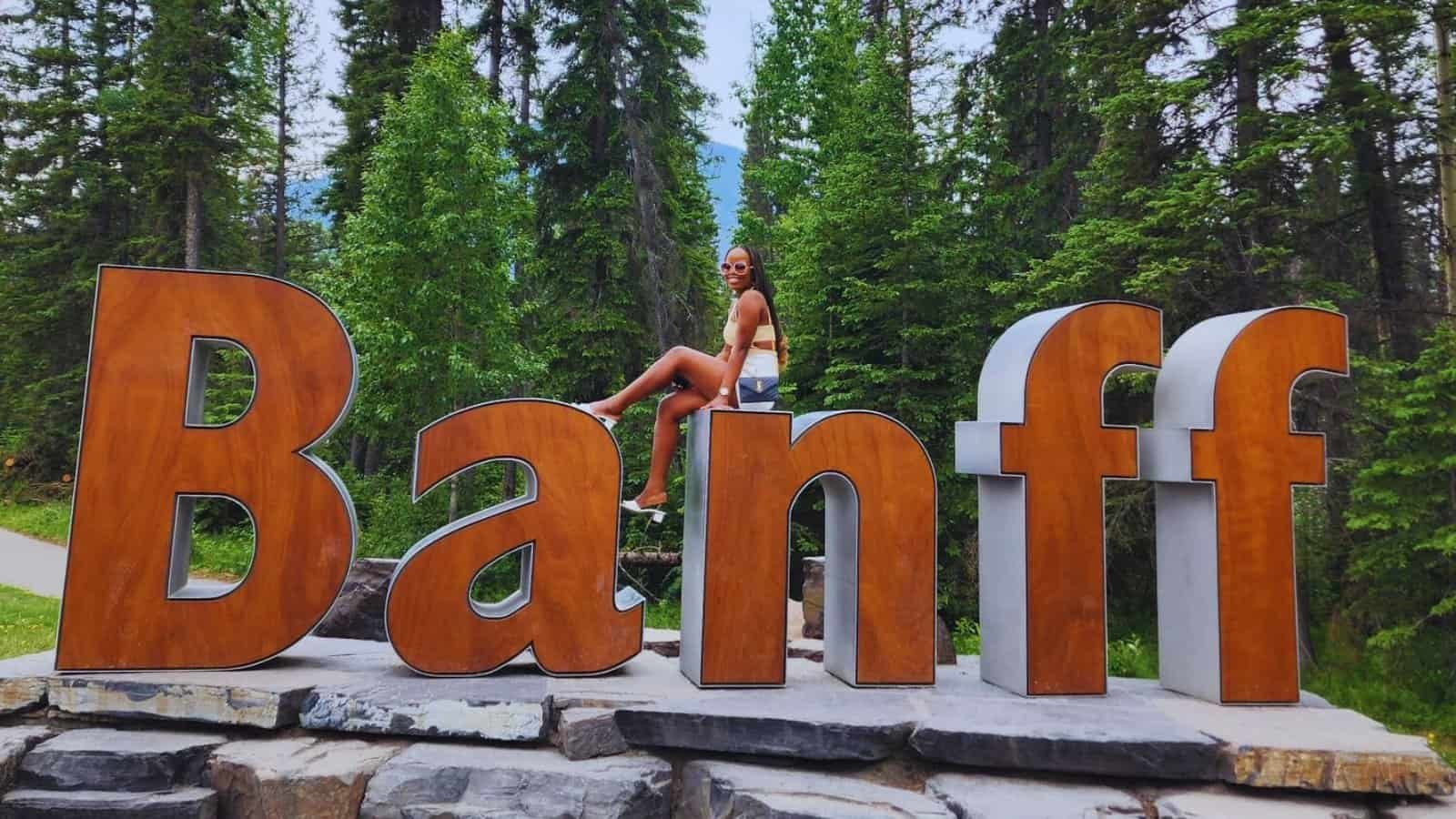
Banff National Park Itinerary: The Best 3-4 Day Guide

Banff National Park is one of the most beautiful places in the entire world. If you’re looking for a Banff National Park itinerary that actually tells you what to do, what it costs, and what to book before you leave home, you’re in the right place!
This park is famous for its turquoise glacier lakes, majestic mountain peaks, and landscapes that look almost too good to be real, a trip to the Canadian Rockies is genuinely a trip of a lifetime.
Here’s what actually trips people up the first time: Banff National Park looks manageable until you start planning and realise the most beautiful places are spread across a huge area, parking at Moraine Lake has been banned for years, shuttle bus tickets sell out weeks in advance, and some of the glassy turquoise lakes don’t thaw until late June. None of that is obvious from the photos.
The first time I visited Banff, I knew immediately I had to come back. I have been several times since and the beauty of this place is genuinely spectacular and it doesn’t fade with repeat visits. No matter how many days you have here, it still won’t feel like enough to uncover everything the park has to offer.
This three-day Banff National Park itinerary, with an optional fourth day in Yoho National Park, covers the best things to do in Banff for first-time visitors who want to see the highlights without spending their holiday solving problems they didn’t know existed. It’s primarily summer-focused but works as a Canadian Rockies itinerary framework year-round.
The best time to visit Banff is July and August for peak colour and full access, though late September and early June are strong alternatives if you want fewer crowds. More on that in the FAQ below.
Itinerary at a Glance
- Day 1 – Banff town, Bow Falls, Cave and Basin, Lake Minnewanka, Vermilion Lakes, Banff Gondola
- Day 2 – Johnston Canyon, Moraine Lake, Lake Louise
- Day 3 – Icefields Parkway scenic drive
- Day 4 (optional) – Yoho National Park
Before You Arrive
Getting There
Fly into Calgary International Airport (YYC), the easiest way to reach Banff National Park from most major cities. From Calgary International Airport, Banff is about 90 minutes west on the Trans-Canada Highway, a straightforward drive through flat prairie that gradually gives way to foothills and then the full wall of the Canadian Rockies appearing on the horizon.
Car rental: Book a rental car in Calgary before you travel, the easiest way to get around the park. Summer prices jump significantly if you leave it until arrival. Off-airport rental companies are often cheaper; they run free shuttles from the terminal.
I’ve visited Banff a few times now and it’s one place I always say should be on everyone’s bucketlist. It’s absolutely breathtaking every single time. I’ve even explored it without a car, which is more doable than people think (full guide here. That said, this itinerary will require a car. Shuttle bus services exist for specific spots but without your own vehicle you lose flexibility and spend too much time waiting around.
Parks Canada Pass
Every visitor to Banff National Park needs a Parks Canada pass. You pay at the park gate on the highway as you enter. Just pull up, pay, and they hand you a pass to display on your dashboard. Don’t skip this.
Cost: Day pass: ~$12.25 CAD per adult. Annual Discovery Pass: ~$83.50 CAD per adult, ~$167.50 CAD family. Worth it if you’re visiting for 7+ days or planning to return. Kids under 17 are free. Buy online here before you go to skip the entrance queue.
The Parks Canada pass covers all national parks including Banff, Yoho, Kootenay and Jasper National Park, so one purchase covers the full trip.
Where to Stay
Stay in Banff town. It’s the most central base, puts you close to the park’s most popular things and cuts unnecessary driving time off every morning. The town of Banff sits right inside the park surrounded by mountain views. You notice it the moment you step outside on the first morning.
Booking ahead: Book 2-3 months ahead for summer travel. Banff town fills up fast and good hotels sell out. The closer to July you're travelling, the earlier you need to be.
Fairmont Banff Springs is the famous option, a castle-style resort above the Bow Valley that’s been one of the most recognisable hotels in North America for over a century.
There are good mid-range hotels on Banff Avenue too. If budget is a concern, downtown Banff has a few hostels worth considering. You can also base yourself in Canmore, a mountain town about 20 minutes from Banff, and explore the park from there, which is a popular option if you’re on a tight budget. If you don’t want to drive, there are public buses running between Canmore and Banff town. I’ve done it both ways. Canmore is cheaper and perfectly doable, but I genuinely preferred staying right in Banff town itself. Waking up inside the park, being able to head out early without a 20-minute drive first, and having the mountains on your doorstep from the moment you step outside. It’s worth the extra cost if you can stretch to it.
Day 1: Banff Town and Nearby Lakes
The first day is about getting your bearings. Don’t try to drive to the famous lakes straight away. Use this day to explore Banff town and some of the most beautiful places in the park that are a short drive away. This is the perfect amount of time to ease into the place before the bigger days ahead.
Banff Avenue – Morning
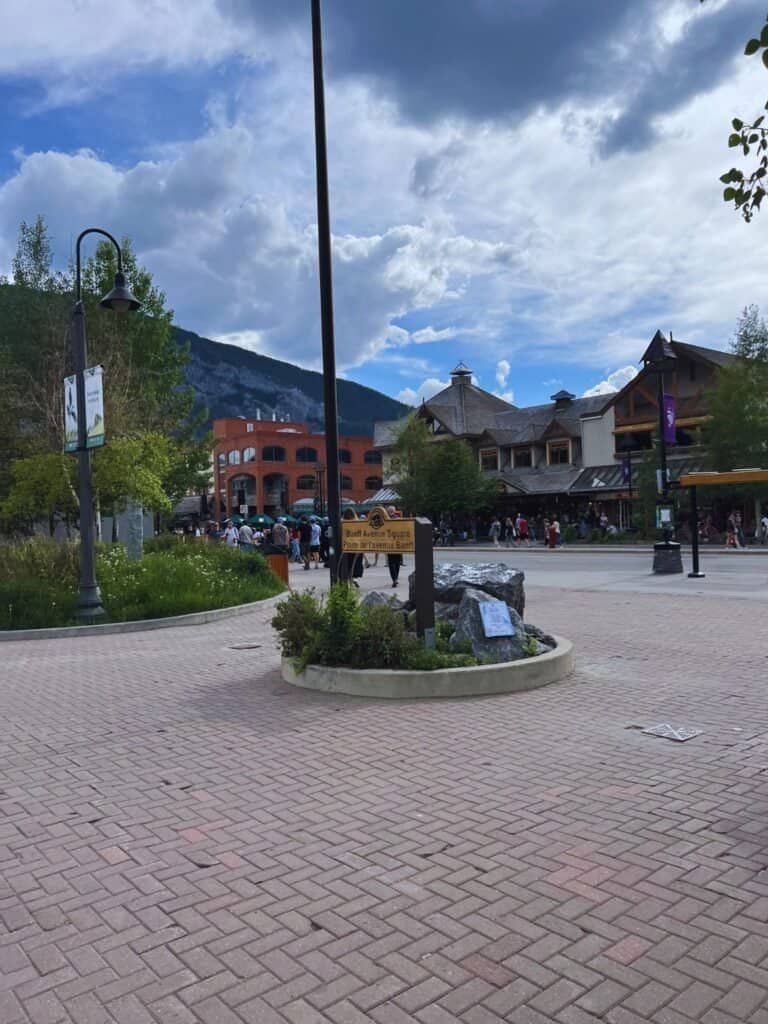
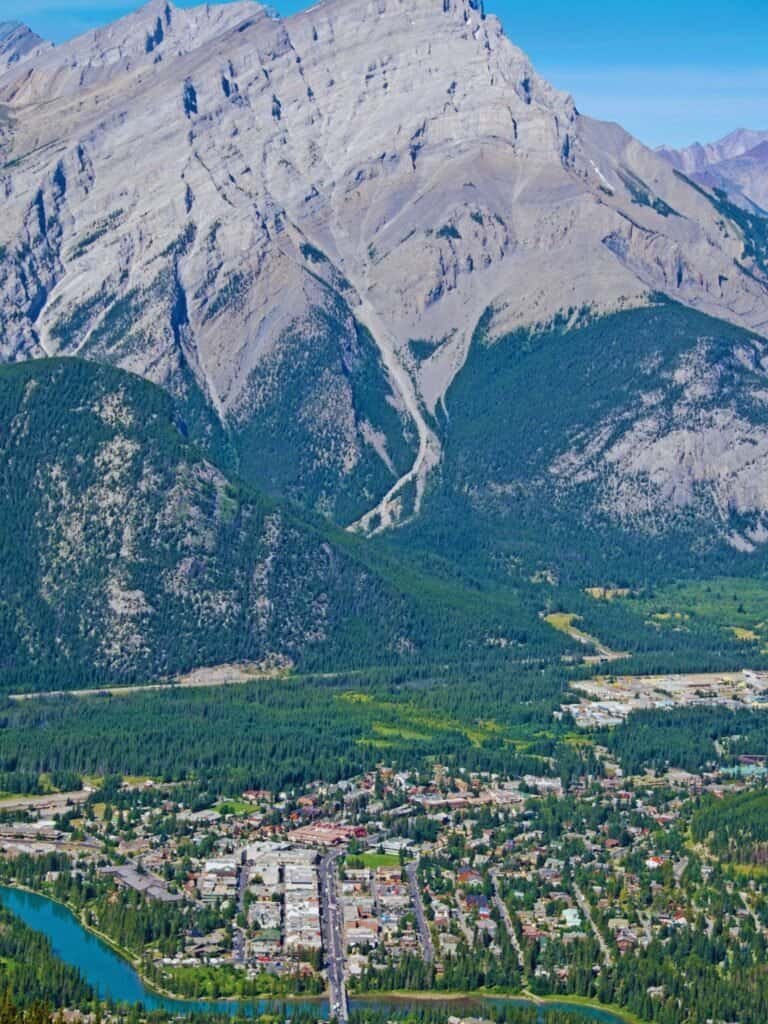
One of my favourite things to do on the first morning is just walk down Banff Avenue and take it all in. You step outside and Cascade Mountain is right there at the end of the road and it genuinely stops you in your tracks. In summer, Banff Avenue is pedestrian only so it’s really easy to just wander around without worrying about traffic. Bear Street runs parallel and is pedestrian only all year round, it’s a bit quieter and has some lovely little cafés and independent shops worth popping into. The Cascades of Time Gardens is also nearby and worth a quick look.
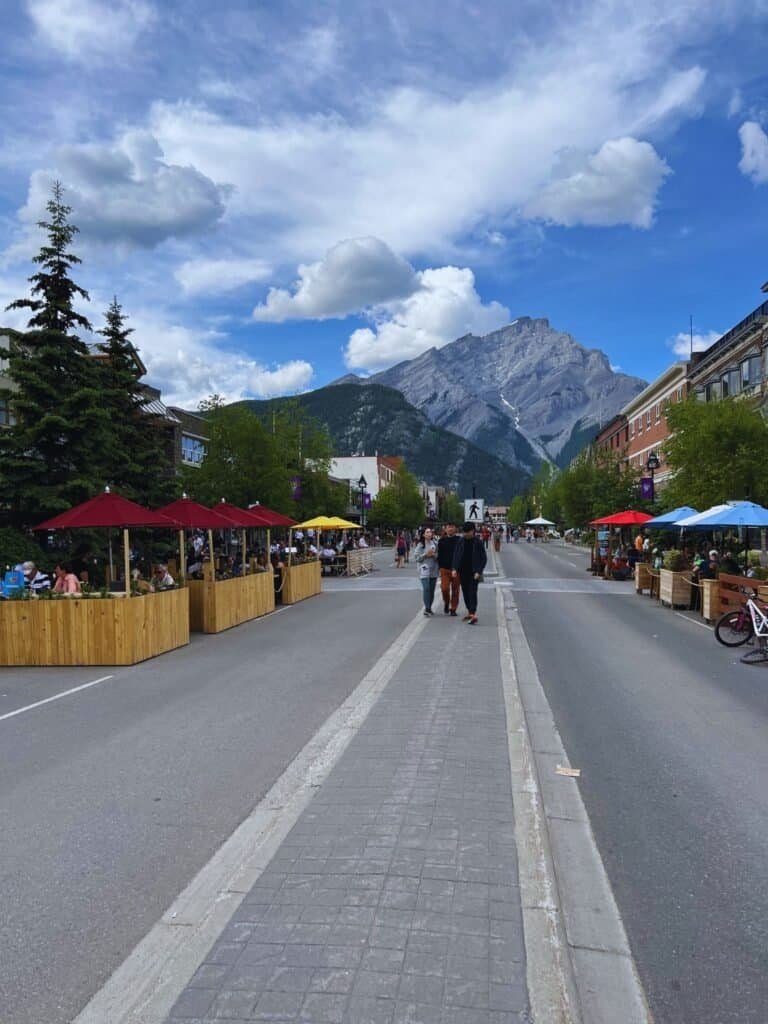
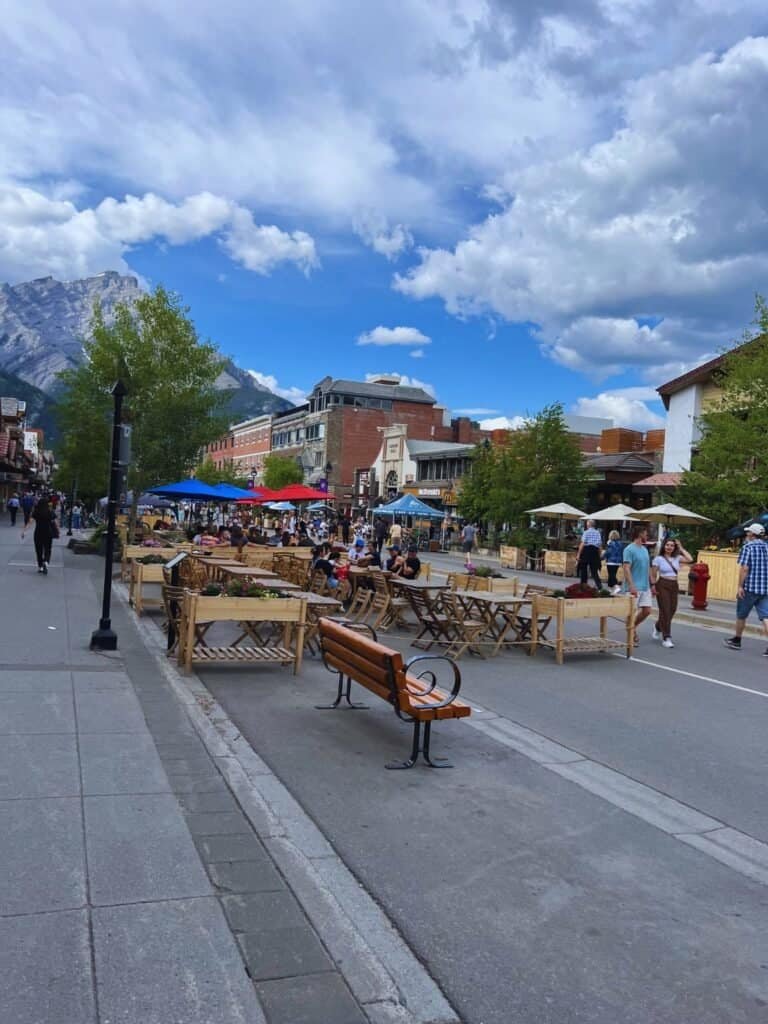
If you want someone to show you around, the Open Top Touring is a really fun option where you get driven around town in a vintage open-top vehicle with commentary on all the main spots. I’ve actually done it twice – once with my sister and once on a girls’ trip for a bridal shower, and it was a hit both times. It’s a great way to get your bearings on day one and honestly just a lot of fun. Either way, grab a coffee, slow down and just enjoy being there.
Coffee: Whitebark Cafe on Bear Street is the local favourite. Gets busy after 9am.
Cave and Basin National Historic Site
This is where Canada’s first national park began. The Cave and Basin National Historic Site is where natural hot springs were discovered by railway workers in the 1880s, which eventually led to Canada’s first national park being established in 1885. The site has good exhibits that put the whole park in context. It’s an easy walk from downtown Banff – about a 10-minute walk from Banff Avenue, worth an hour of your morning. If you want to add a short hike before lunch, Tunnel Mountain is right in the heart of Banff town, an easy climb with panoramic mountain views over the Bow Valley. The trail is 4.5km round trip and takes about 1.5 hours at a comfortable pace. If you’re short on time, starting from the Upper Parking Lot lets you complete most of the hike and still reach the best viewpoints. Tunnel Mountain is one of the most accessible hikes in Banff National Park and a good way to get your legs moving on day one.
This is actually where it all started. Railway workers discovered natural hot springs here back in the 1880s and that discovery led to Canada’s first national park being created in 1885. I think it’s really worth visiting just to understand the history of the place you’re exploring. The exhibits inside do a great job of putting everything in context and it’s about a 10-minute walk from Banff Avenue, so it’s easy to fit into your morning.
If you feel like a short hike before lunch, Tunnel Mountain is right in town and it’s a really good one to start with. It’s not too hard and the views over the Bow Valley from the top are gorgeous. The trail is 4.5km round trip and takes about 1.5 hours at an easy pace. If you’re short on time, start from the Upper Parking Lot and you’ll still get to the best viewpoints. It’s one of the easier hikes in Banff National Park and a nice way to ease into things on day one.
Cost: Around $5 CAD per adult. Open daily. A short distance from the centre of town, easy to walk to.
Bow Falls
Bow Falls is either a short drive or a pleasant walk along the river from town. The falls are wide and really powerful, and the mountains around you make it one of those spots that just feels so quintessentially Banff. The trail is 1.2km one way and mostly flat with a few wooden stairs. Start at the pedestrian bridge that crosses the Bow River and follow the trail from there. There are also some lovely little art installations along the way, paintings and sculptures dotted along the route. It’s free and takes about 20-30 minutes.
The Fairmont Banff Springs is just a short walk from the falls and honestly it’s worth wandering up to even if you’re not staying there. The building is stunning and the grounds are beautiful.
Lake Minnewanka
Lake Minnewanka is just a 15-minute drive from town and honestly a lot of people skip it in favour of the more famous lakes, but I think that’s a mistake. It’s huge, 21km long and 142 metres deep, and it has a really different feel to the other lakes in the park.
The history is really fascinating too. The lake has been important to the Stoney Nakoda peoples for thousands of years, and there was actually a whole Canadian resort town that was flooded to create the reservoir back in the 1940s. On calm days you can still see remnants of it underwater. The boat cruise tells you all about this as it takes you to the far end and back.
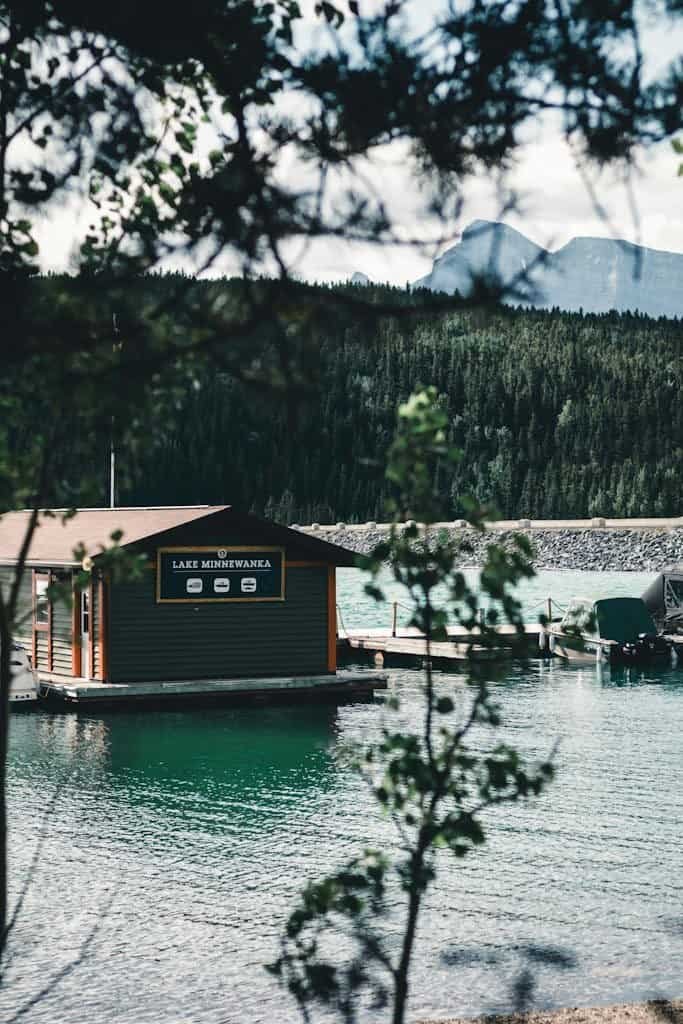
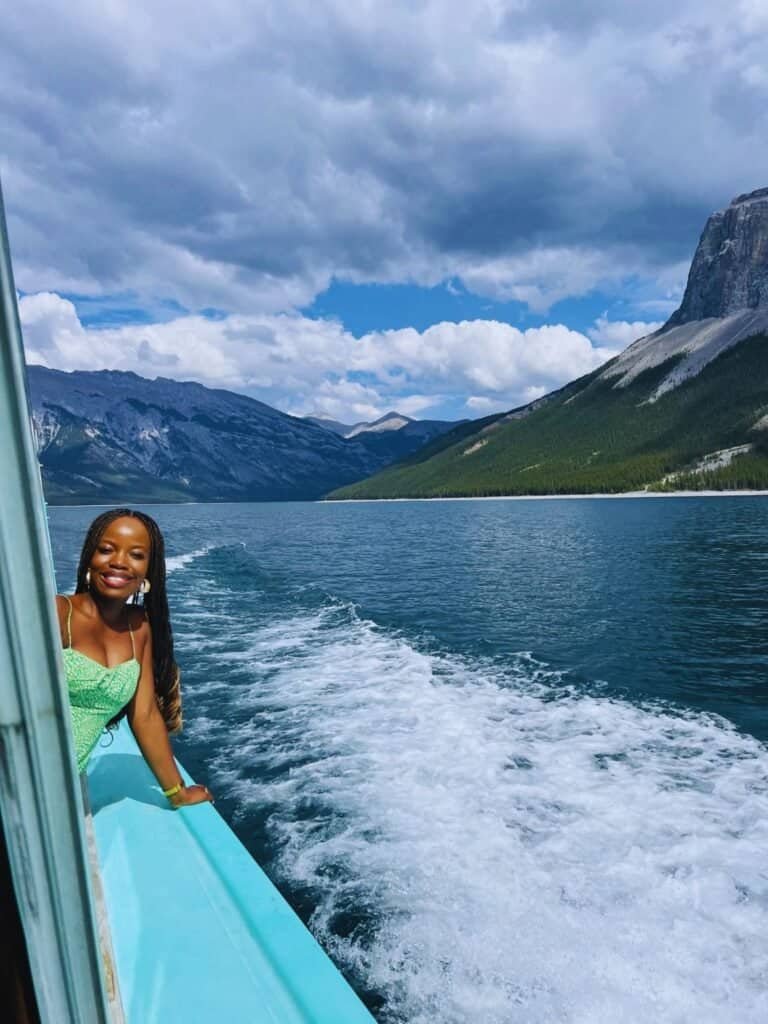
Boat cruise: Around $75-79 CAD per adult. Book at Banff Jasper Collection. It sells out on busy summer days. Allow 90 minutes for the cruise. The lakeshore trail toward Stewart Canyon is a free easy walk along the shoreline if you’d rather stay on foot.
Johnson Lake and Two Jack Lake are both just a short drive back toward town and really beautiful, with Mount Rundle reflected in the water. Johnson Lake is honestly one of the most underrated spots near Banff and a lovely place to go if you want a bit of quiet away from the busier areas.
Vermilion Lakes – Late Afternoon
On your way back into town, stop at Vermilion Lakes, which you’ll also sometimes see spelled Vermillion Lakes. It’s right on the western edge of Banff town and one of the most beautiful spots in the park for photos. Mount Rundle reflects perfectly in the still water and you’re very likely to see wildlife here too, bighorn sheep and elk are really common.
Parking is right there so it’s only a few minutes’ walk to the water’s edge. Late afternoon light is excellent, and watching the light change across the mountains here is one of the favorite things I love about this beautiful lake.
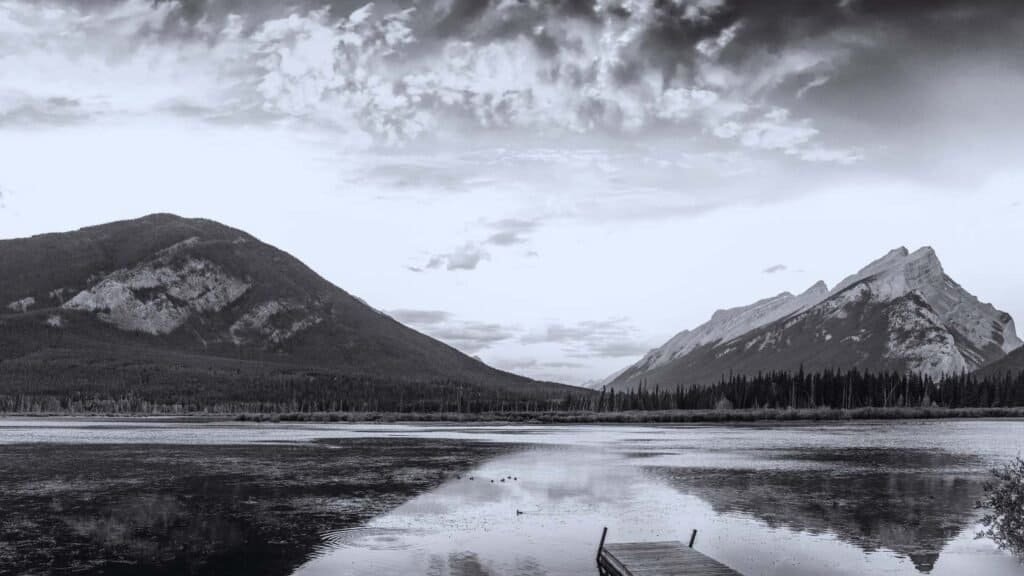
Arrive about 90 minutes before sunset for the best light. Vermilion Lakes is one of the best places in the park for a quiet end to a busy day. A short walk from the car gets you right to the water. One of my favourite things to do at the end of a full day in the park.
Banff Gondola – Late Afternoon / Evening
The Banff Gondola is one of those things that really delivers. You ride up to the top of Sulphur Mountain and suddenly you’re looking out over six mountain ranges. It’s the moment you really start to understand how big and wild this place is. I’d really recommend going later in the day to catch the evening light.
Cost & booking: Adult tickets ~$69–93CAD. depending on when you visit. Book at banffjaspercollection.com, which is cheaper than the door and skips the queue. Runs until around 9pm in summer so a late ride catches the best light.
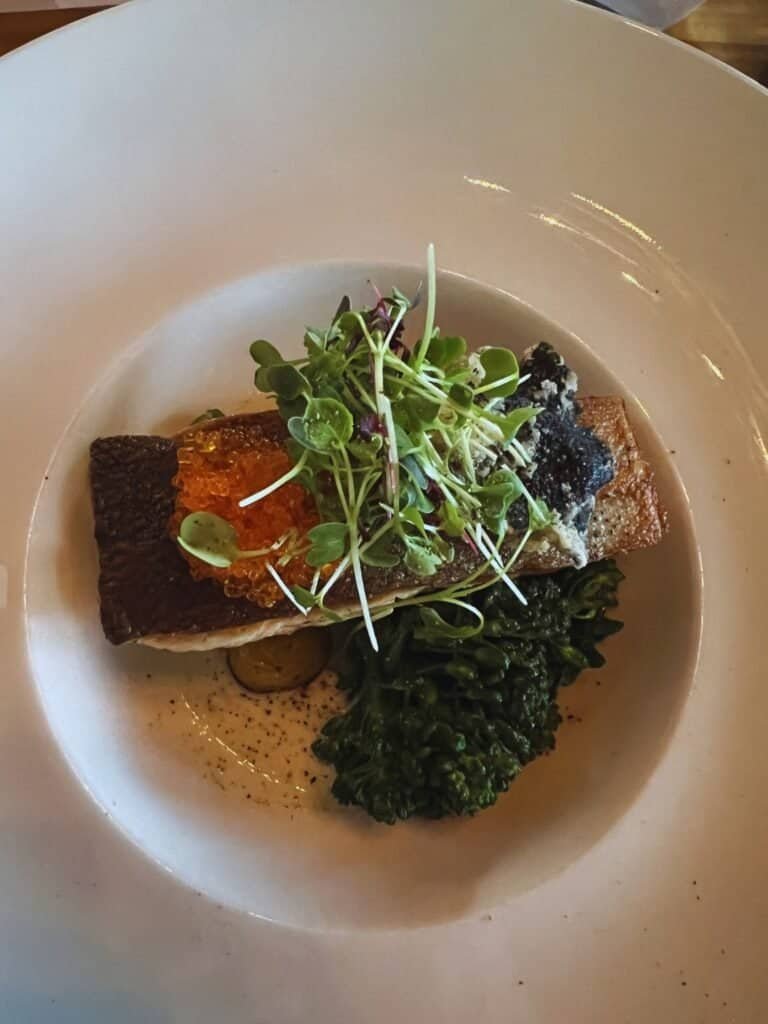
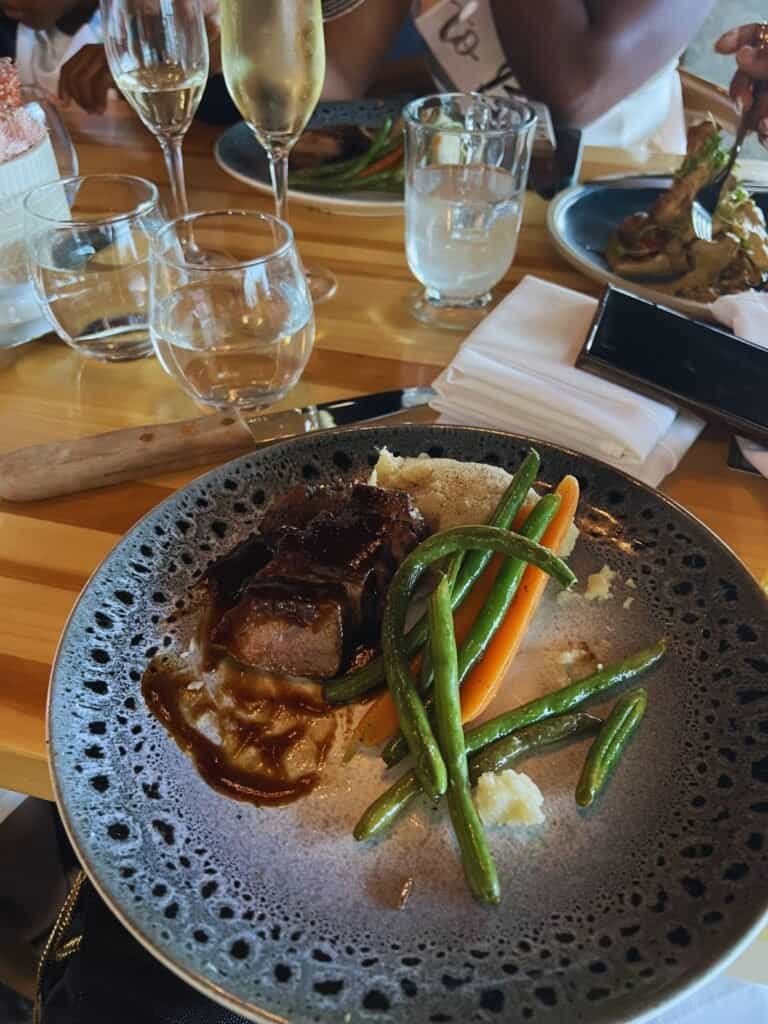
Sky Bistro: The restaurant at the top of Sulphur Mountain serves dinner with views across the valley. Make a reservation as it books out, especially on weekends. If you’re going to spend on one meal in Banff, this is the one. It can be pricey but if you’re celebrating an event or just want a delicious food with a view, then you should definitely check it out!

Banff Upper Hot Springs
Finish day one at the Banff Upper Hot Springs, about a minute drive from the gondola base. Warm natural hot springs pools with mountain views, open until 11pm. Some hotels in Banff town also have a hot tub with mountain views if you’d rather stay close to your accommodation, but the Upper Hot Springs is one of my favourite things to do in the park, particularly in the summer months when the contrast between the warm water and the cool mountain air is perfect. After a full day on your feet, this is the best possible way to end the evening.
Cost & logistics: Around $20 CAD per adult. No booking needed. Tickets bought at the door. Towel and swimsuit rental available. Weeknights are quieter than weekends.
Day 2: Johnston Canyon, Moraine Lake, and Lake Louise
This is the biggest day. Johnston Canyon, Moraine Lake, and Lake Louise together make up the most popular things to see in Banff National Park, and the logistics need to be sorted before you goo. An early start is not optional on this day.
Johnston Canyon – Early Morning or Late Evening
Johnston Canyon is a popular place for good reason. The trail runs along canyon walls on iron catwalks bolted directly into the rock face, threading through a narrow gorge to two spectacular waterfalls. It’s one of the best things to do in Banff and one of the most accessible. The Lower Falls Trail is 1.2km one way and about an hour return. The Upper Falls Trail extends to 2.5km one way and roughly 2 hours return, an easy hike along well-maintained trail suitable for most ages. If you want more adventure on this day, Mt. Norquay’s Via Ferrata is an assisted climbing experience up the mountain with four different routes varying in difficulty. It’s a great option for anyone who wants to push beyond a standard hike without needing technical climbing experience.
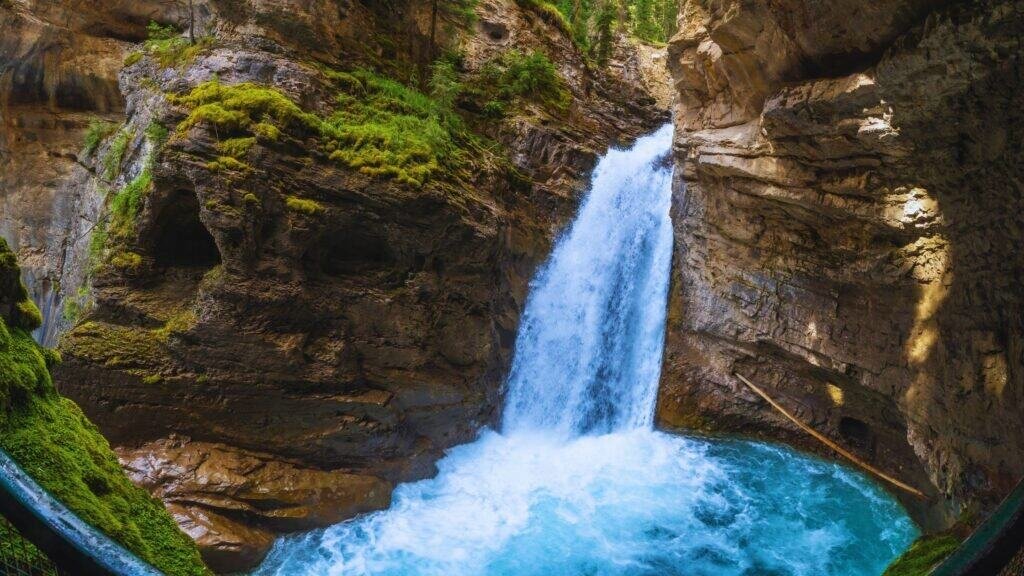
Arrive before 9am or after 5pm. The parking lot fills completely by mid-morning and the catwalks become slow queues by 10am. It's a 24km short drive west of Banff town on the Bow Valley Parkway.
Wildlife: The Bow Valley Parkway on the way to Johnston Canyon is one of the best early morning drives in the park for spotting wildlife. Black bear, bighorn sheep, and elk are all common along this road. Drive slowly.
Moraine Lake – Mid-Morning
Moraine Lake is the most photographed lake in Canada. The Valley of the Ten Peaks sits directly above it and the colour of the water is one of those things you have to see in person to fully understand. It’s the first stop most people have on a Banff wishlist and it lives up to everything said about it.
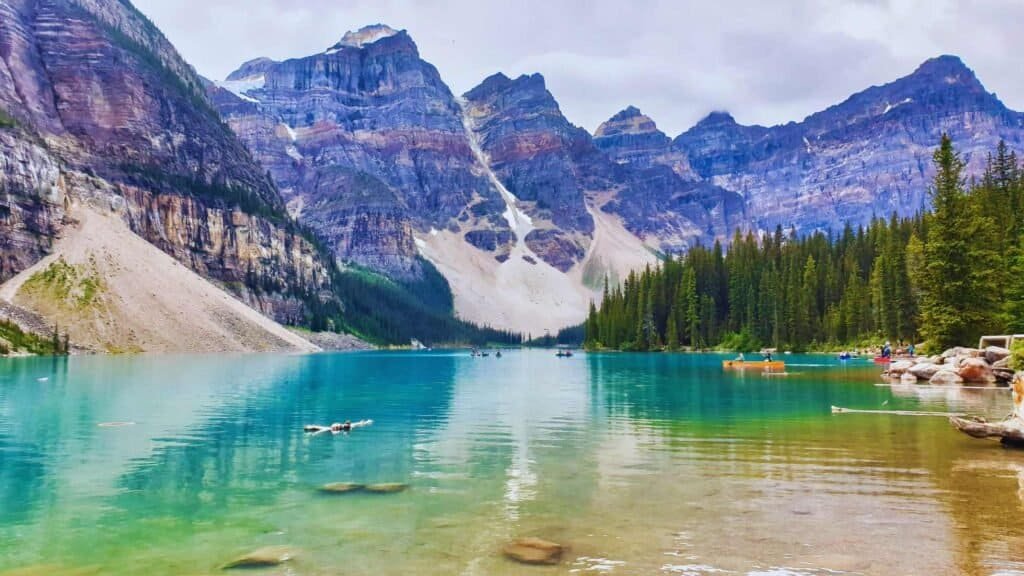
Private vehicles have been banned from Moraine Lake Road for several years. You cannot drive there. You need either the Parks Canada shuttle, the Roam Transit shuttle bus from Banff or Lake Louise, a private shuttle, or to be staying at Moraine Lake Lodge.
Shuttle booking: Parks Canada shuttle tickets go on sale in April at reservation.pc.gc.ca and sell out within minutes for popular dates. Set a reminder and be online the moment they open. If you miss them, Roam Transit Route 10 from Banff town runs ~$10 CAD each way from late June. Private shuttles cost ~$50–60 CAD per person return but are more flexible.
Season: Moraine Lake Road is open June 1 to October 13 only. Before early June the road is closed due to avalanche risk, so don’t plan a visit in late spring before June 1.
Once you’re there, walk up to the Rockpile viewpoint, a short hike of about 5 minutes, and the full lake and ten peaks panorama opens up below you. Take your time here. It’s one of the most beautiful places in North America and it’s worth sitting with for a while. If you want a longer hike from here, the Consolation Lakes trail is a great option, about 5.8km return, easy terrain, with excellent mountain views into a quieter valley behind the lake.
Lake Louise – Afternoon
Lake Louise is about 15 minutes from Moraine Lake and while it’s a completely different vibe, it’s just as stunning. It’s broader, with the Victoria Glacier visible at the far end and the iconic Chateau Lake Louise hotel right on the shore. Even coming straight from Moraine Lake, the colour of the water still gets you.
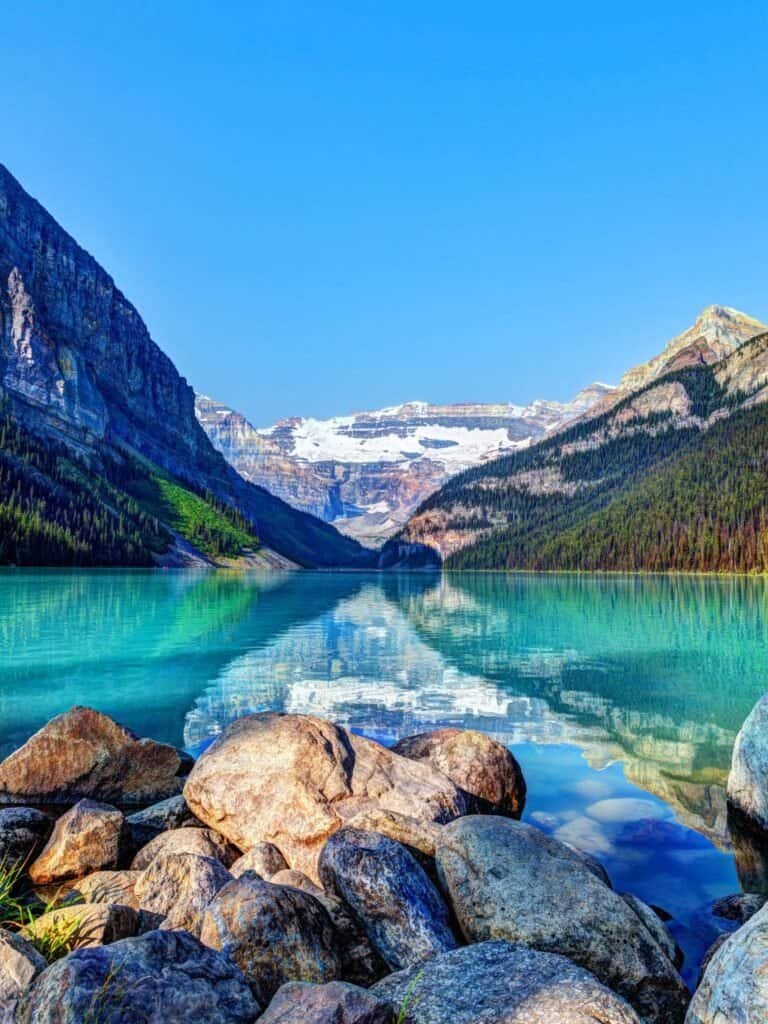
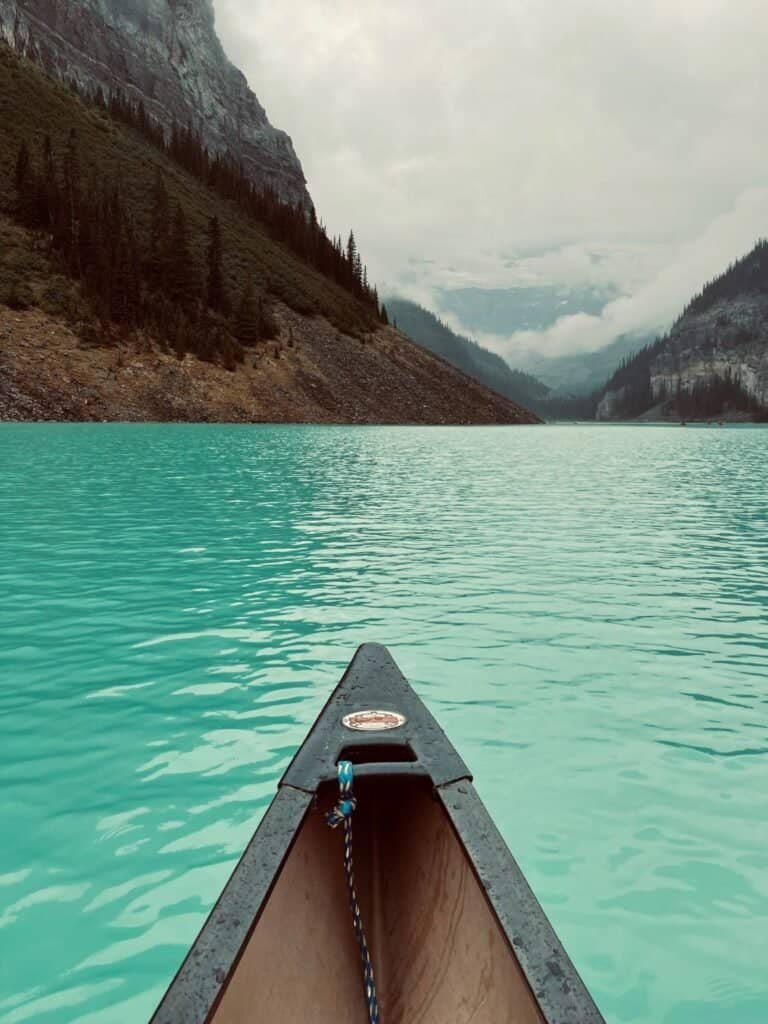
Parking: Don’t try to park at the lake itself. It fills up completely by 8am in summer. Use the Park and Ride at Lake Louise Ski Resort instead and take the free Parks Canada connector shuttle to the lake
Canoe rental: You can rent a canoe from the Fairmont Boathouse for around $170 CAD per hour. It’s not cheap but paddling on that lake with those mountains behind you is a really special experience. Queue at the boathouse early if you want one.
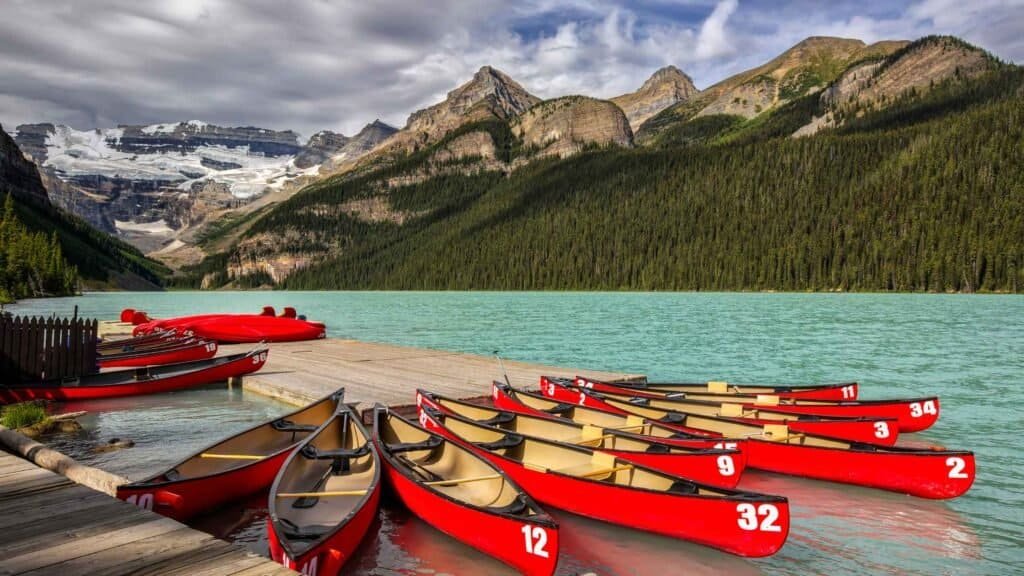
The Lakeshore Loop is flat, easy, and runs the full length of the lake with good views all the way. Allow at least an hour.
Afternoon Hike Options from Lake Louise
These are the favourite hikes in the Lake Louise area, all leaving from the lake itself:
- Lake Agnes Tea House: 7km return, about 2 hours up. This one is so fun because there’s an actual tea house at the top where you can sit down with a cup of tea and a snack with incredible views. From there you can carry on to the Big Beehive or Little Beehive for even better views. Add another hour if you want to keep going.
- Plain of Six Glaciers: 14km return, 3–4 hours. This one takes more time but the views are incredible, hanging glaciers and really dramatic scenery. If you have a full afternoon to spare this is the one to do. Fairview Lookout: If you want something shorter, this is only 1km each way and about 30 minutes up. You still get lovely elevated views over the Chateau Lake Louise and the lake below
- Fairview Lookout: A shorter option if you want elevation views without the full commitment: 1km each way and about 30 minutes up. Good views over the Chateau Lake Louise and the lake below.
- Larch Valley: Save this one for late September if you can. When the larch trees turn golden it’s one of the most stunning things I’ve ever seen in the Canadian Rockies. Genuinely worth planning your trip dates around.
Optional Side Trip: Radium Hot Springs
If you have a spare afternoon or want a different kind of detour, Radium Hot Springs is about 1.5 hours from Banff through the Rocky Mountain Trench. It’s a small, quaint mountain village with a Swiss-influenced character and natural hot springs pools set into the canyon walls. A different vibe from the Banff Upper Hot Springs, more low-key, less touristy, and the drive through Kootenay National Park is scenic in its own right. Worth considering if you have a flexible day.
Day 3: Icefields Parkway
The Icefields Parkway is a 230km scenic drive connecting Banff National Park with Jasper National Park, widely considered one of the most beautiful road trips in North America, and that’s not an overstatement. The Icefields Parkway passes Bow Lake, Peyto Lake, Mistaya Canyon, and the Columbia Icefield, with dozens of pull-offs along the way. Glaciers hang above the road, waterfalls drop off cliff faces you drive right past, and glacial lakes appear around corners looking almost too vivid to be real. It’s one of the most beautiful places in the world. This three-day Banff itinerary treats the Icefields Parkway as a full day, which is the right amount of time to do it properly.
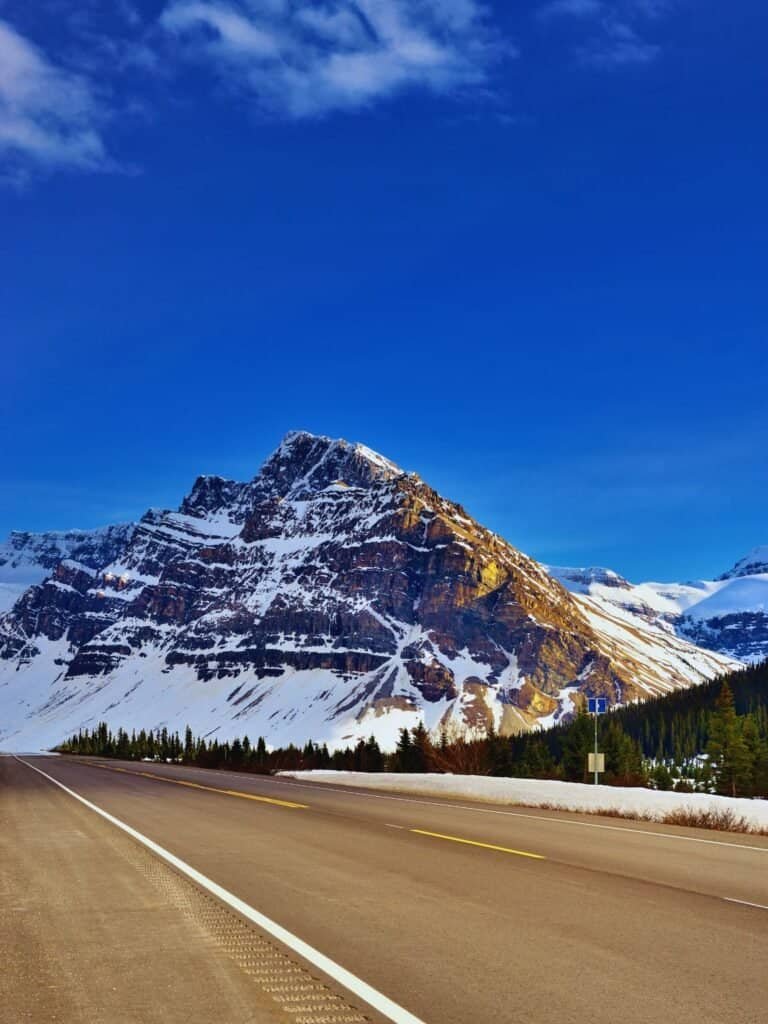
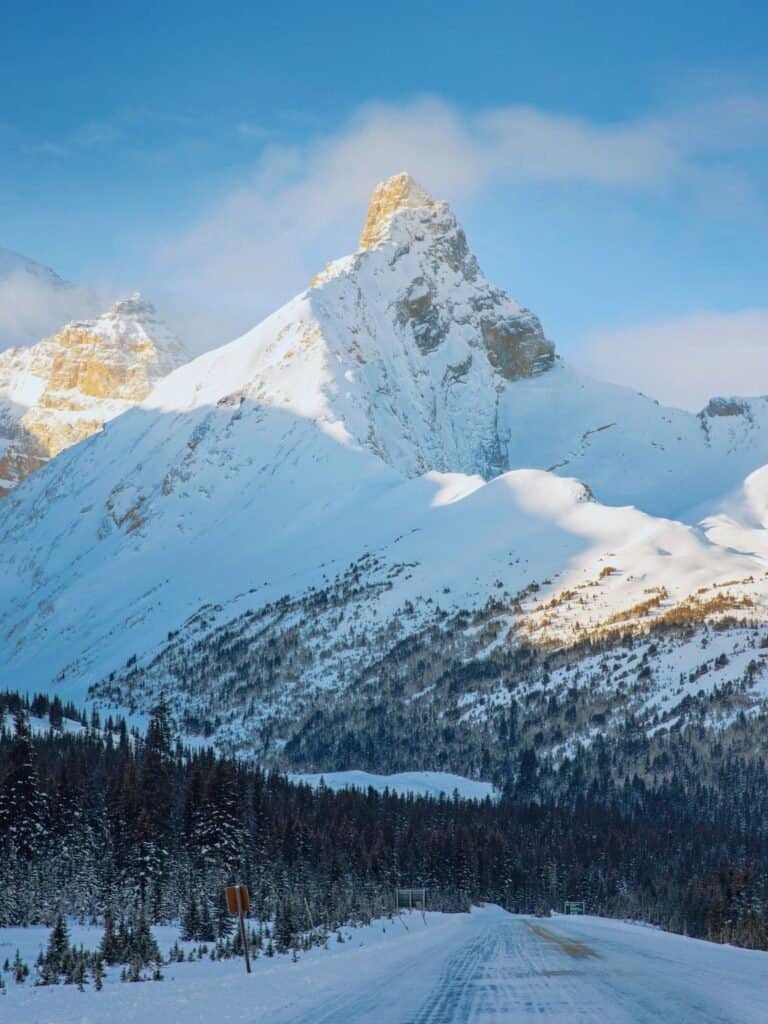
Leave by 7 or 8am. The drive to the Columbia Icefield alone is about 2 hours and you’ll be stopping a lot along the way. Make sure your tank is full before you leave. There is a petrol station at Saskatchewan River Crossing about halfway but it’s expensive and not always open. Fill up in Banff town the night before
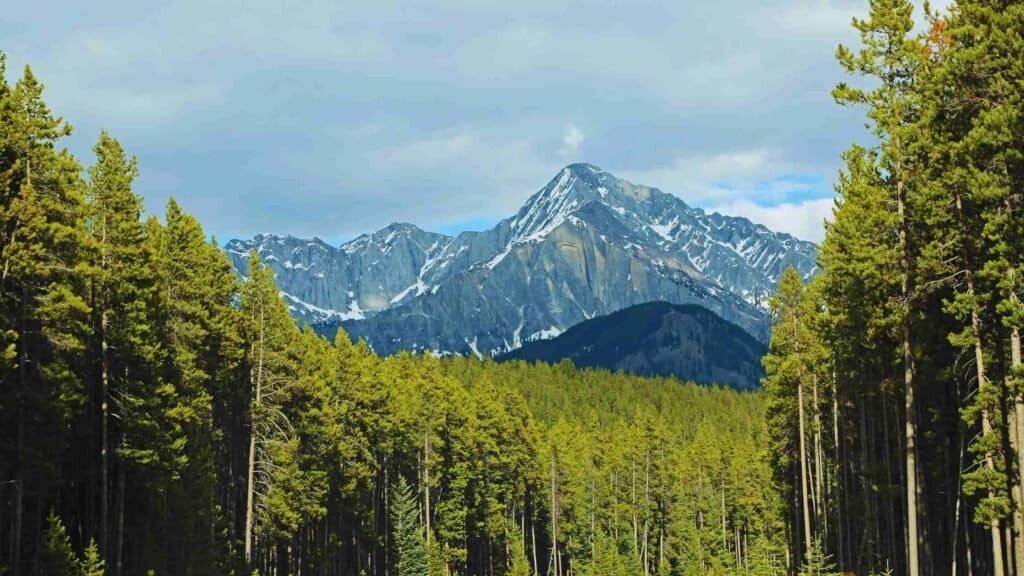
Bow Valley Parkway
Take the Bow Valley Parkway out of Banff town rather than the Trans-Canada. It’s a quieter road running parallel to the highway and one of the best early morning drives in the park for wildlife. Bighorn sheep on the roadside are common. Black bear sightings happen regularly. Drive slowly. If you’d rather have a guide, an evening guided wildlife tour is a great alternative. Operators run these most evenings in summer and wildlife activity is highest at dusk.
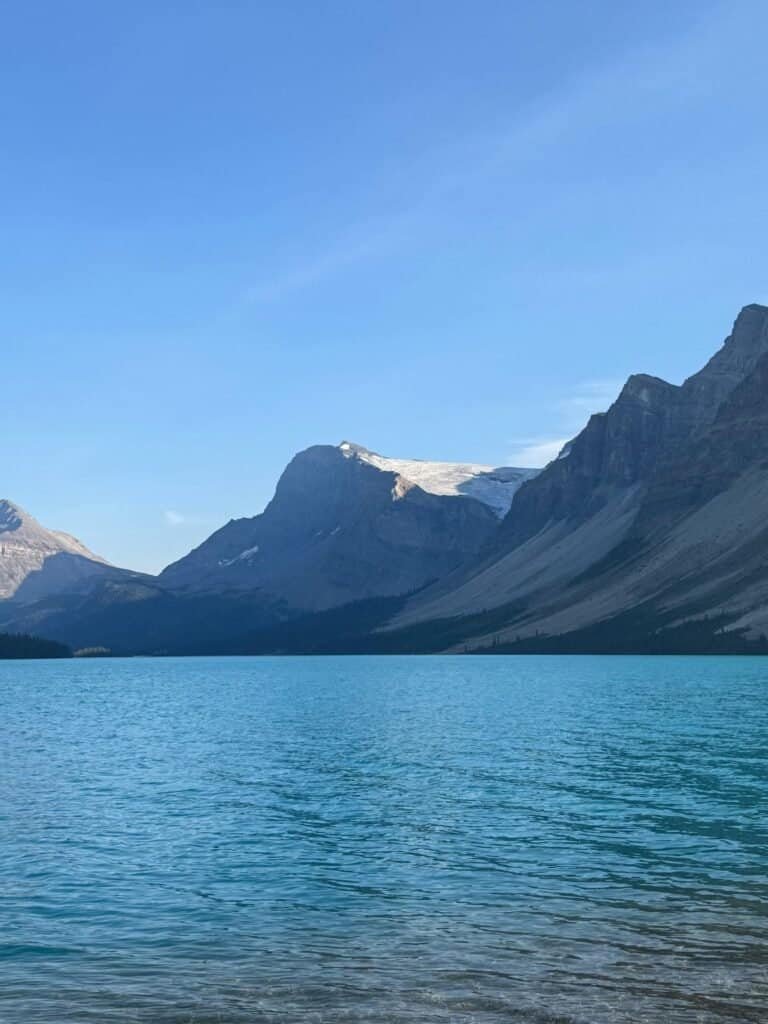
Bow Lake – First Stop
One of the first stops on the Icefields Parkway and one of the best. Park the car, take a short walk to the water’s edge, and you’re at a glacial lake sitting beneath Bow Glacier. On a still morning the surrounding mountains reflect perfectly across the surface. Allow 30-45 minutes.
Peyto Lake
A short hike of 15 minutes from the parking lot to the viewpoint above Peyto Lake, one of the best views in Banff National Park. From up there you can see the lake’s distinctive shape and that intense turquoise colour stretching through the valley below. One of the most photographed spots on the entire parkway, and the view justifies every photo taken of it. In my opinion, it is a truly perfect place!
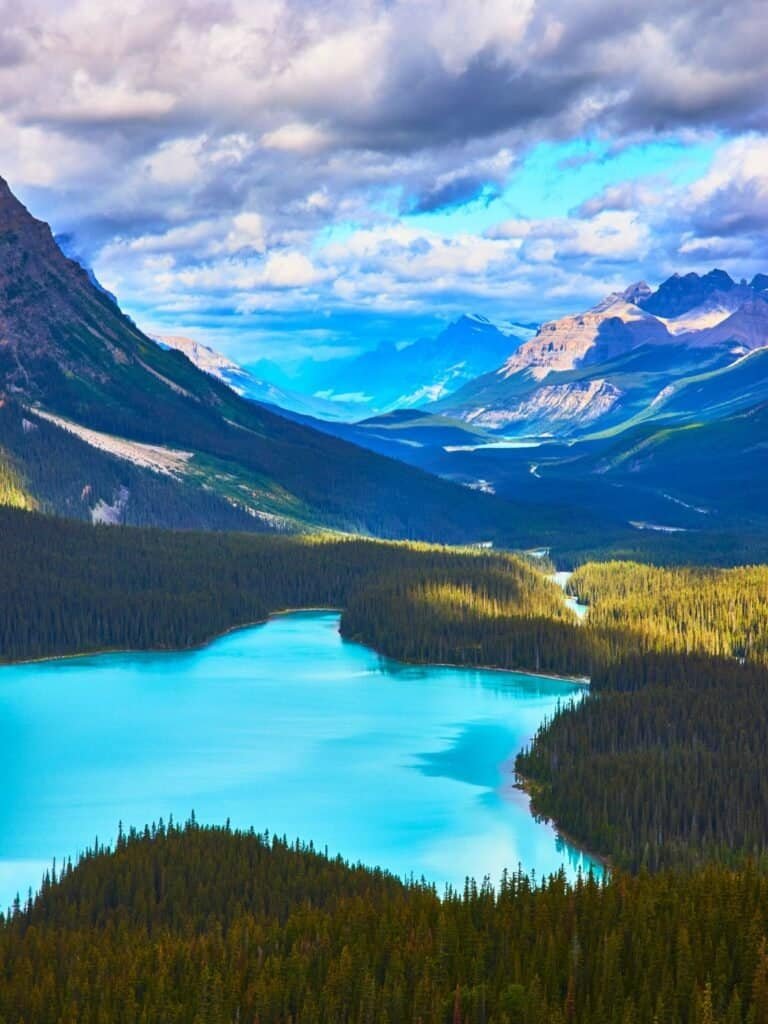
Get there early for the best experience and the best views without people in every shot.
Mistaya Canyon
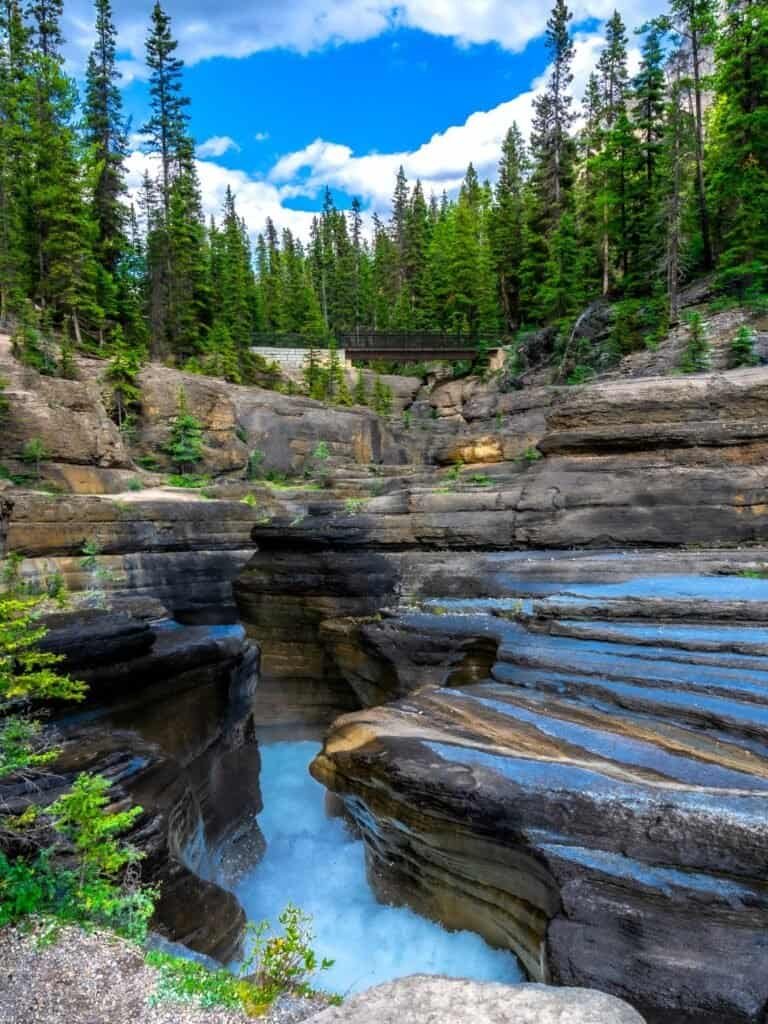
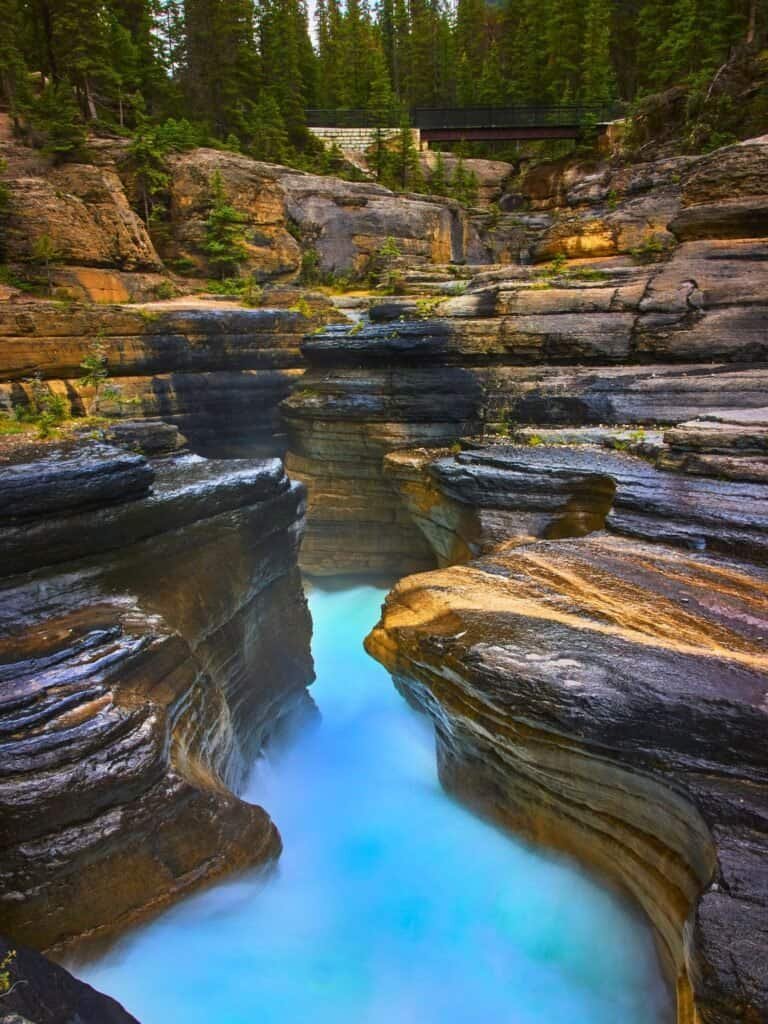
Most people drive straight past this. I believe it’s worth stopping as it is a short hike of 10 minutes from the road. It leads you to a canyon where rushing water has carved smooth curved walls through limestone over thousands of years. Completely different from the open lake viewpoints: quieter, more enclosed, genuinely impressive. Allow 30 – 45 minutes.
Columbia Icefield
For an unforgettable Banff National Park itinerary, make sure to include a visit to the Columbia Icefield. This stunning natural wonder is not only the highlight of the Icefields Parkway but also offers a unique opportunity to step onto the Athabasca Glacier. Guided tours in specialized ice vehicles allow you to experience the glacier up close for about 20-30 minutes, providing a memorable taste of ancient ice. Don’t miss this essential stop for an incredible adventure in the heart of the Rockies.
Booking & cost: Ice Explorer tour in the winter season~$60–70 CAD per adult, includes the Glacier Skywalk. Or the Columbia Icefield Adventure at $125 CAD. Book at banffjaspercollection.com. Popular time slots sell out weeks ahead. The whole experience takes 2.5–3 hours including travel and waiting time.
What to wear: It is cold on the glacier even in July, often below 0°C with wind. Bring a proper jacket and gloves regardless of the valley temperature.
Free option: The viewpoints near the Discovery Centre let you see the glacier without paying for the tour. Spending 30 minutes at the free viewpoints still gives a strong sense of the scale if the tour feels like too much time or money.
The Columbia Icefield sits at the boundary between Banff National Park and Jasper National Park. If you have an extra day, continuing north into Jasper National Park along the parkway is one of the best extensions of any trip to this part of the Canadian Rockies.
Day 4 (Optional): Yoho National Park
If you have a fourth day, Yoho National Park is the best addition to this itinerary. It’s just across the British Columbia border, about a 30-minute drive from Lake Louise, and noticeably quieter than Banff while being just as beautiful. Your Parks Canada pass covers entry.
Emerald Lake
Emerald Lake is the highlight of Yoho and it’s genuinely one of the most beautiful places I’ve seen. The colour is a deep green rather than turquoise, which gives it a completely different feel, moodier and more tucked away in the forest. The walk around the lake is about 5km and takes around 90 minutes at an easy pace. On a weekday it can feel almost like you have it to yourself. If you’re thinking about staying the night, Emerald Lake Lodge is right on the water and is one of the most beautiful places to stay in the whole region. It’s a splurge but absolutely worth it if you can stretch the budget.
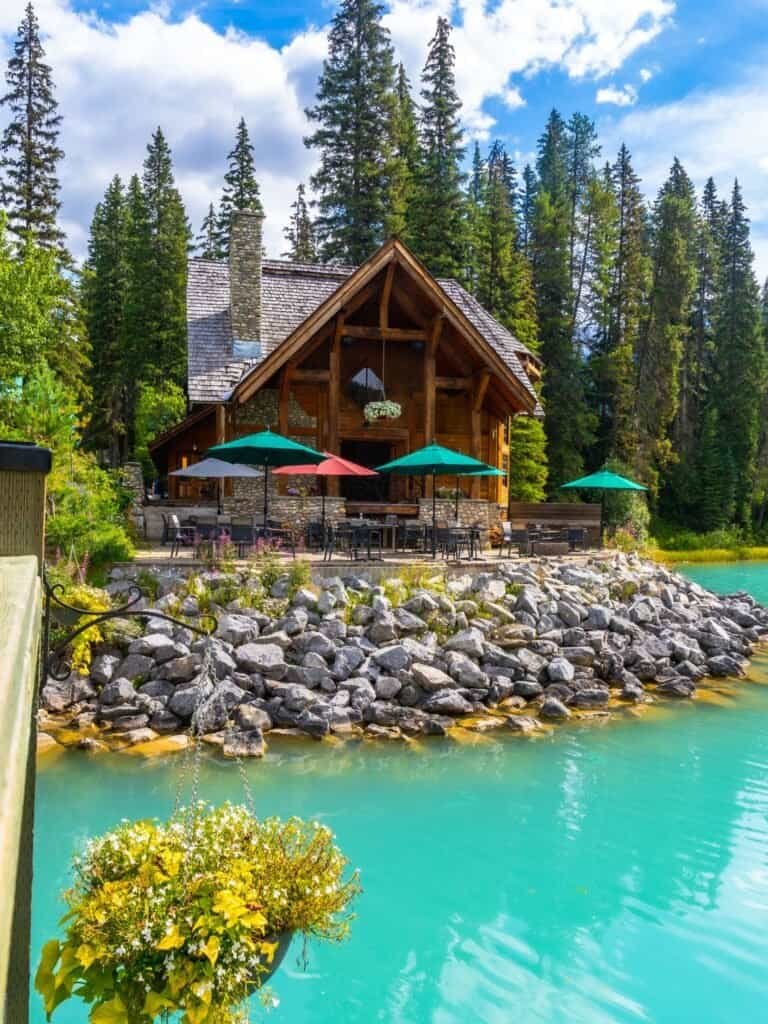
Canoe rental: Around $100 CAD per hour from the boathouse at the lake. The view from the middle looking back at the mountains is excellent, worth the cost if the conditions are calm. Emerald Lake Lodge sits right on the water and is one of the most beautiful places to stay in the surrounding areas of Yoho National Park.
Natural Bridge
The Natural Bridge is just a 5-minute drive from Emerald Lake and really worth a quick stop. The Kicking Horse River has carved completely through a rock shelf and the water rushes through the gap with a lot of force. It’s only about 20 minutes but the rock formations are really cool.
Back near Banff town, Johnson Lake is another spot worth knowing. It’s a quieter lake a short drive from downtown Banff, one of the favourite hikes and walks in the area for people who want to escape the main crowds. Johnson Lake is about a 10-minute drive from Banff town and takes about an hour to walk around.
If you carry on north into Jasper National Park, Spirit Island on Maligne Lake is one of the most iconic sights in the Canadian Rockies and you get there by boat cruise. If you want to extend the trip, 1–2 nights in Jasper is really worth it. You could also stop overnight at Glacier View Lodge right on the Icefields Parkway with views of the Columbia Icefield, which is one of the most dramatic hotel settings I’ve come across.
Banff National Park Itinerary – Practical Notes
Wildlife
Banff National Park is home to grizzly bear, black bear, elk, bighorn sheep, mountain goats, and a wide range of other wildlife. Seeing animals in their natural habitat is one of my favourite things about visiting the park for most people, but it comes with basic rules that matter.
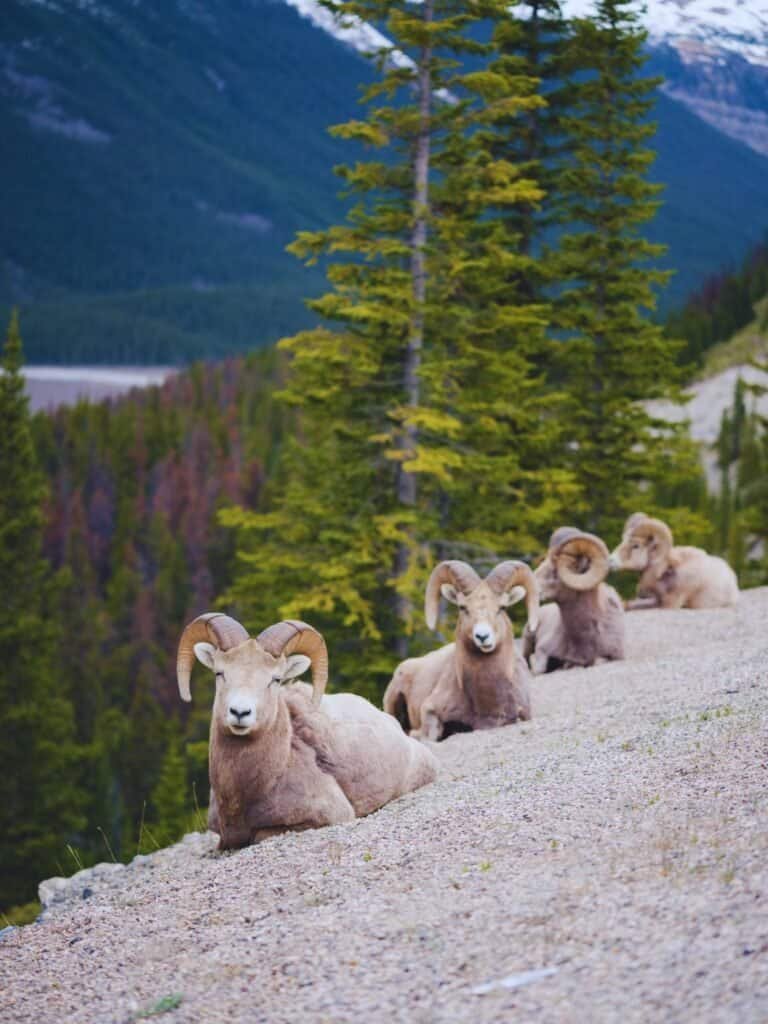
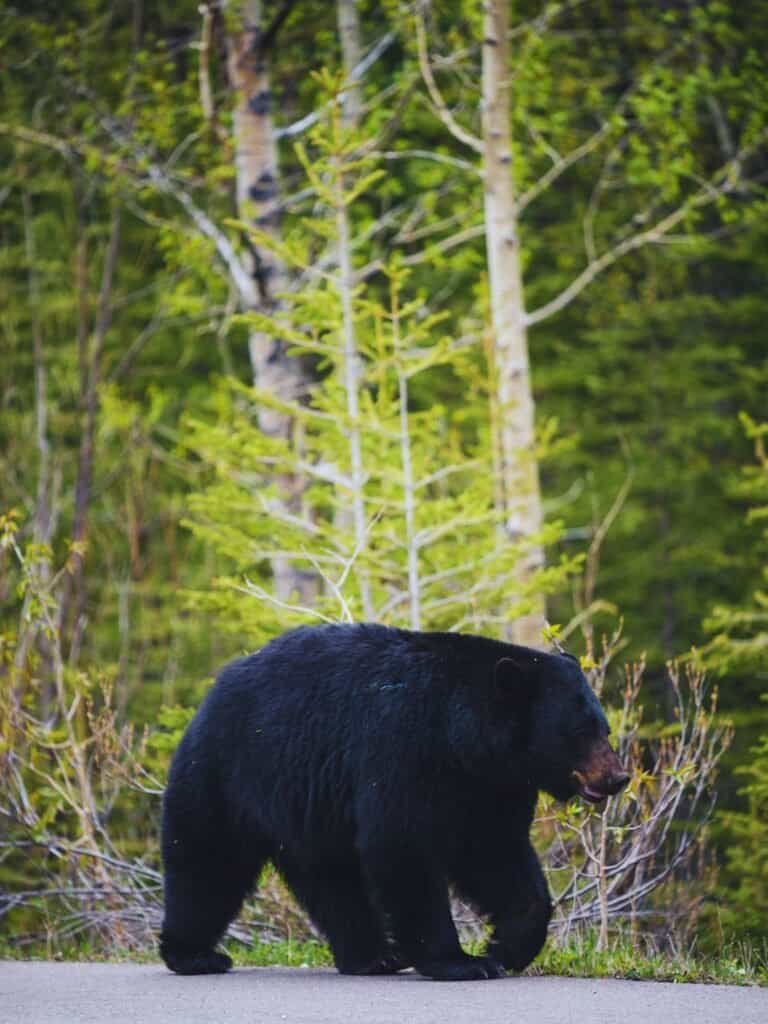
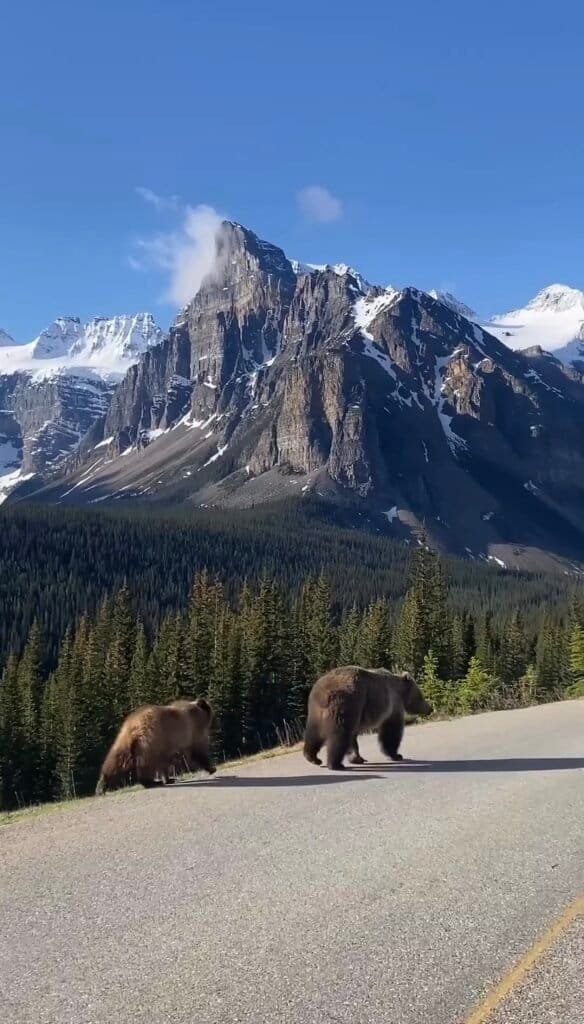
- Keep your distance at all times. The legal minimum is 30 metres from most wildlife and 100 metres from bears and wolves.
- Carry bear spray on any hike away from main crowds. Available in most outdoor shops in Banff town for ~$40 – 50 CAD. Know how to use it.
- If you see a grizzly bear or black bear from the road, stay in the car.
Best Time to Visit Banff National Park
The best time to visit Banff National Park depends on what you want from the trip:
- July to September: Peak season and the best time for most visitors. The glassy turquoise lakes are at their most vivid colour, long days mean more time outdoors, and all outdoor activities are running. The Icefields Parkway is at its best during these months. Every pull-off is accessible and the mountain views are exceptional. Book everything well in advance.
- Late September: One of the best times to visit. Larch valley hikes are at their peak. The golden larch trees across the mountain slopes are one of the most spectacular things the Canadian Rockies offer. Fewer crowds than summer.
- Early June: A great time if you want powerful waterfalls from snowmelt and noticeably fewer crowds. Some high trails still have snow. Moraine Lake opens June 1, so don’t arrive in late spring before that date if the lake is your main reason for visiting.
- Late spring (May): Quieter still, but some glacial lakes remain partially frozen and early June is generally a better choice for first-timers.
- Winter (December – March): A completely different experience. Excellent skiing at Lake Louise Ski Resort and Banff Sunshine Village. Johnston Canyon becomes an ice walk. Far fewer tourists and lower prices.
What to Pack for Banff National Park
- Layers. Always. This is the single most important packing tip for Banff and it catches first-timers out every time. Summer weather in the Canadian Rockies can vary from 12°C to 30°C in the same day. It could be hot walking through downtown Banff in the afternoon and genuinely cold at the top of the Banff Gondola an hour later. Pack clothes you can layer up and strip back as the day changes. A packable down jacket takes up almost no space in a daypack and you will reach for it every single day. Don’t leave it at the hotel.
- Waterproof jacket. Afternoon thunderstorms in the Canadian Rockies arrive fast and leave fast. You can often see them building over the mountains an hour before they hit, but not always. A lightweight waterproof jacket folds small enough to keep in your bag at all times. Put it in your pack every morning and you’ll never be caught out.
- Walking shoes with grip. You don’t need full hiking boots for most of this itinerary. The main trails are well-maintained and the gondola summit has boardwalks. But flat-soled trainers or canvas shoes will be slippery on the Rockpile at Moraine Lake, uncomfortable on the catwalks at Johnston Canyon, and useless if it rains. A pair of trail runners or light hiking shoes covers everything on this trip comfortably.
- Sunscreen and sunglasses. Banff sits at 1,400 metres elevation and many of the best stops, including Peyto Lake viewpoint, the Icefields Parkway pull-offs, and Sulphur Mountain summit, are in full sun with no shade. UV exposure is significantly stronger at altitude than at sea level and most people underestimate it. Apply before you leave the hotel, not when you get there. Reusable water bottle. Tap water in Banff town is excellent, so just fill up before you head out each morning. Trails and viewpoints don’t always have water available, and buying single-use bottles adds up quickly. A 1-litre bottle covers a half-day out; bring two for anything longer.
- Bear spray. If you’re hiking anywhere away from the main crowds, and several stops on this itinerary qualify. Bear spray is worth carrying. It’s not a nice-to-have; it’s the recommended safety tool for hiking in bear country. Most outdoor shops stock it for around $40–50 CAD and some will buy back unused canisters when you leave.
- Cash and tipping. Credit cards are accepted almost everywhere in Banff town, so you won’t need much cash day to day. That said, US dollars are not accepted in Canada, and some trailhead parking meters and the Upper Hot Springs are cash-only. Having $50 – 100 CAD covers any gaps. ATMs are available on Banff Avenue. One thing many international visitors miss: Canada has a tipping culture. 15% is standard at restaurants, cafés, and for tours. It’s not optional in the way it might feel in some countries. Factor it into your budget.
Key Bookings to Make Before You Leave Home
- Accommodation in Banff town – 2–3 months ahead for summer
- Moraine Lake shuttle – goes on sale in April, sells out in minutes for peak dates
- Banff Gondola – cheaper online, skips the queue
- Columbia Icefield Ice Explorer – popular slots fill weeks ahead
- Lake Minnewanka boat cruise – advisable on busy summer days
- Sky Bistro dinner reservation – especially on weekends
- Rental car in Calgary – book ahead to secure the best rate
Optional Day 5: Jasper National Park
If you have a fifth day, or want to turn this into a standalone Jasper trip, Jasper National Park is the natural extension. It sits at the northern end of the Icefields Parkway, about 3.5 hours from Banff town or 90 minutes from the Columbia Icefield. Jasper is bigger, wilder, and significantly less crowded than Banff. The landscape feels more remote, the wildlife is more abundant, and the pace is different. It rewards an extra day or two rather than a rushed single visit, but even one day gives you a proper taste of what makes it one of the best national parks in North America.
If you’re continuing straight from Banff, the most logical approach is to drive the full length of the Icefields Parkway on Day 4 (as this itinerary covers), stop at the Columbia Icefield, and continue north into Jasper town to overnight. That way Day 5 is a full day in Jasper rather than half a day driving to get there.
Banff National Park Itinerary FAQ
Is 3 days enough for Banff?
Three days is enough time to see the highlights of Banff National Park, including Moraine Lake, Lake Louise, the Icefields Parkway, and Banff town, at a pace that doesn’t feel rushed. It’s the perfect amount of time for a first visit. That said, you will leave wanting more. Adding a fourth day for Yoho National Park makes the trip feel complete, and anyone who has a week should consider extending north along the Icefields Parkway into Jasper National Park, which is a completely different experience again.
Do I need to book Moraine Lake in advance?
Yes, and this is the most important booking in this entire itinerary. Private vehicles have been banned from Moraine Lake Road since 2022, so the only ways to get there are the Parks Canada shuttle, the Roam Transit bus, a private shuttle company, or staying at Moraine Lake Lodge. The Parks Canada shuttle goes on sale in April and sells out within minutes for peak summer dates. If you miss it, Roam Transit is a reliable backup but doesn’t run until late June. Do not assume you can just show up and figure it out on the day.
When do the lakes turn turquoise?
The glassy turquoise lakes that Banff is famous for get their colour from rock flour, which is fine glacial sediment that stays suspended in the water as glaciers melt. The lakes are typically frozen until late May or early June, and the colour intensifies through June as snowmelt increases. Peak colour runs from July through September. If you’re visiting in late spring before mid-June, some lakes may still have ice or appear a duller blue-grey. Moraine Lake Road also doesn’t open until June 1, so late spring visits before that date won’t include the park’s most famous lake.
Do I need a car in Banff?
For this itinerary, yes. The Icefields Parkway is a road trip by nature and cannot be done without a vehicle. Lake Minnewanka, Yoho National Park, the Bow Valley Parkway, and Johnston Canyon are all significantly harder to reach without a car. That said, it is possible to visit Banff without a car. Shuttle buses, Roam Transit, and organised tours cover the most popular spots. I’ve done it myself and written a full guide on visiting Banff without a car if that’s the route you want to take: How to explore Banff without a car
Is Banff National Park worth it?
Without question. Banff National Park is one of the most beautiful places in North America and one of those rare destinations that genuinely exceeds expectations. The combination of glacial lakes, mountain views, wildlife, and scenery that looks implausible in real life makes it unlike almost anywhere else. The costs, including flights into Calgary International Airport, rental car, Parks Canada pass, accommodation in Banff town, add up, but for the experience you get, it is ABSOLUTELY WORTH IT! I’d put it on the bucketlist of anyone who hasn’t been.
What is the best time to visit Banff for the first time?
July and August are the best time for a first visit. The glassy turquoise lakes are at peak colour, all outdoor activities are running, and the long days give you maximum time to explore. The trade-off is crowds. Summer months are the busiest time of year in Banff National Park and you need to book accommodation and key experiences well in advance. Late September is the best kept secret: the crowds drop significantly after Labour Day, the larch trees turn golden, and the park feels like a different place. Early June is a good middle ground, quieter than July but the lakes are open and the waterfalls are spectacular from snowmelt.
How do I get from Calgary to Banff?
The easiest way is to rent a car at Calgary International Airport and drive west on the Trans-Canada Highway, about 90 minutes with no traffic. If you don’t want to drive, the Banff Airporter runs a shuttle bus service directly from Calgary International Airport to Banff town for around $60–80 CAD each way, with multiple daily departures. The shuttle drops you at your hotel in Banff town, which is convenient if you’re not renting a car for the full trip.
My Final Thought
Banff National Park is one of the most beautiful places in North America. The photos are spectacular and the real thing is way better. Even after several visits I still find myself pulling over on drives I’ve done before because the light has changed and I want to look at the mountains for a while longer.
This is a three-day Banff National Park itinerary that covers the highlights at a pace that doesn’t leave you exhausted but you can always go on a much slower pace and do what works best for you. Banff National Park rewards people who take their time, whether that’s a slow morning drive on the Trans-Canada Highway watching the mountains appear, or pulling over on the Icefields Parkway . This road trip through Banff National Park is one of the best things you can do in North America, and the perfect amount of time to get a real feel for the place. The logistics need a bit of upfront work, particularly Moraine Lake. Once those bookings are sorted, the rest of the trip looks after itself. Have a beautiful Banff trip!