Things to Do in Bruce Peninsula: Top Guide for 2026

Bruce Peninsula had been on my list for years, and after finally spending five days exploring the region, it’s easy to see why it’s one of Ontario’s most popular outdoor destinations. From the turquoise waters of Georgian Bay and limestone cliffs to scenic hiking trails and small harbour towns, there’s plenty to see without feeling like you’re rushing from one place to the next.
One of the things I enjoyed most was how different each day felt. One morning I was hiking above Georgian Bay, and by the afternoon I was cruising through Fathom Five National Marine Park or wandering around Tobermory with an ice cream in hand. Spending five days here gave me time to enjoy the well-known attractions as well as a few quieter spots along the way.
If you’re planning your first visit, this guide shares the best things to do in Bruce Peninsula, along with practical tips from my trip, including where to stay, how many days you’ll need, and what to book in advance.
Bruce Peninsula at a Glance

* Location: Bruce County, Ontario
* Drive from Toronto: ~4 hours
* Recommended stay: 3-5 days
* Best for: Hiking, boat tours, beaches, road trips
* Best time to visit: Late May to June and September
* Book ahead: The Grotto parking, Flowerpot Island boat tours, accommodation
Is Bruce Peninsula Worth Visiting?
I definitely think so.
Bruce Peninsula is unlike anywhere else I’ve visited in Southern Ontario. Between the turquoise waters of Georgian Bay, the limestone cliffs, forest trails, and small harbour towns, there’s a huge variety of landscapes packed into one region. It’s also home to Bruce Peninsula National Park and Fathom Five National Marine Park, two of Ontario’s best-known outdoor destinations.
Although many people visit as a day trip, I think it’s a place that’s best enjoyed over several days. Spending five days here gave me time to hike, take a boat cruise to Flowerpot Island, explore Tobermory, and discover a few quieter places that I would have missed on a shorter visit.
If you enjoy hiking, spending time on the water, exploring small towns, or simply slowing down in nature, Bruce Peninsula is a destination I’d happily recommend.
Where Is Bruce Peninsula?
Bruce Peninsula is located in Bruce County in southwestern Ontario. It lies between Georgian Bay and Lake Huron, two of North America’s Great Lakes, and is around a four-hour drive from Toronto, making it a popular weekend getaway.
The peninsula is divided into South Bruce Peninsula and Northern Bruce Peninsula, with Tobermory at its northern tip.
Tobermory is the main hub for exploring the region and the gateway to both Bruce Peninsula National Park and Fathom Five National Marine Park. It’s where most visitors choose to stay, thanks to its easy access to hiking trails, boat tours, restaurants, and many of the peninsula’s best-known attractions.
What to Pack for Bruce Peninsula
If you’re planning to spend most of your time outdoors, packing a few essentials will make your trip much more comfortable. I’d recommend bringing:
- Sturdy hiking shoes for the rocky trails around The Grotto, Indian Head Cove, and Lion’s Head.
- A reusable water bottle, especially if you’re planning longer hikes.
- Sunscreen, sunglasses, and a hat during the warmer months.
- A lightweight rain jacket, as the weather can change quickly near Georgian Bay and Lake Huron.
- Bug spray, particularly if you’re hiking or camping.
- A swimsuit and towel if you plan to swim or cool off at Cyprus Lake.
- Camping gear if you’re staying at Cyprus Lake Campground or one of the park’s backcountry campsites.
- A camera or phone with plenty of storage because you’ll probably take more photos than you expect.
Need to pick up a few things before your trip? I’ve linked a few of my favourite hiking and travel essentials below.
Getting Around Bruce Peninsula
The easiest way to explore Bruce Peninsula is by car. Many of the main attractions are spread out across the peninsula, so having your own vehicle makes it much easier to visit places like Lion’s Head, Greig’s Caves, and Tobermory at your own pace.
If you don’t drive, you still have a couple of options. ParkBus operates seasonal service from Toronto to Bruce Peninsula, while several companies also offer guided day trips from Toronto that include highlights such as The Grotto and Tobermory. These tours can be a good option if you don’t want to rent a car. Browse Bruce Peninsula day trips from Toronto on GetYourGuide.
Once you’re in Tobermory, the harbour, restaurants, shops, and boat tour departures are all within walking distance. However, reaching attractions outside the town is much easier with a car.
Accessibility
Many of Bruce Peninsula’s most popular attractions are reached by hiking trails with rocky and uneven terrain, so they may not be suitable for everyone. Places like The Grotto, Indian Head Cove, and sections of the Bruce Trail can be particularly challenging.
If you’re travelling with a mobility device or service animal, it’s worth checking the latest accessibility information on the Parks Canada website before your visit, as trail conditions and accessible facilities can change.
My Favourite Things to Do in Bruce Peninsula
1. Explore Bruce Peninsula National Park
If you’re visiting Bruce Peninsula for the first time, Bruce Peninsula National Park is the place to start. It’s home to many of the area’s best-known attractions, including The Grotto, Indian Head Cove, Halfway Log Dump, and Cyprus Lake, as well as several sections of the Bruce Trail.
I spent a lot of my trip exploring the park, and it quickly became one of my favourite parts of the peninsula. Between the limestone cliffs, cedar forests, and the clear blue waters of Georgian Bay, every trail seemed to lead to another viewpoint or shoreline that looked completely different from the last.
If you’re planning to visit The Grotto, remember that parking must be reserved in advance during the busiest months, and reservations often sell out. I booked mine ahead of time, and I’d recommend doing the same if you’re visiting in summer.
2. Stop by the Bruce Peninsula National Park Visitor Centre
Before setting off on the trails, I’d recommend stopping at the Bruce Peninsula National Park Visitor Centre.
It’s a good place to learn more about the peninsula, with exhibits covering the Niagara Escarpment, local wildlife, and the area’s history. You can also check the latest trail conditions, ask about parking reservations, and get advice from park staff before heading out.
One of my favourite parts of the visitor centre was the observation tower. It’s only a short walk from the main building and offers views across the forests and Georgian Bay. I visited on a clear day, and the views were well worth the climb. Just be prepared for quite a few steps to reach the top.
If you’re visiting on a foggy day, keep in mind that visibility can be limited, so you’ll get the best experience when the weather is clear.
If it’s your first time visiting Bruce Peninsula, I think it’s a worthwhile place to start before heading to places like The Grotto or Indian Head Cove.
3. Relax at Indian Head Cove
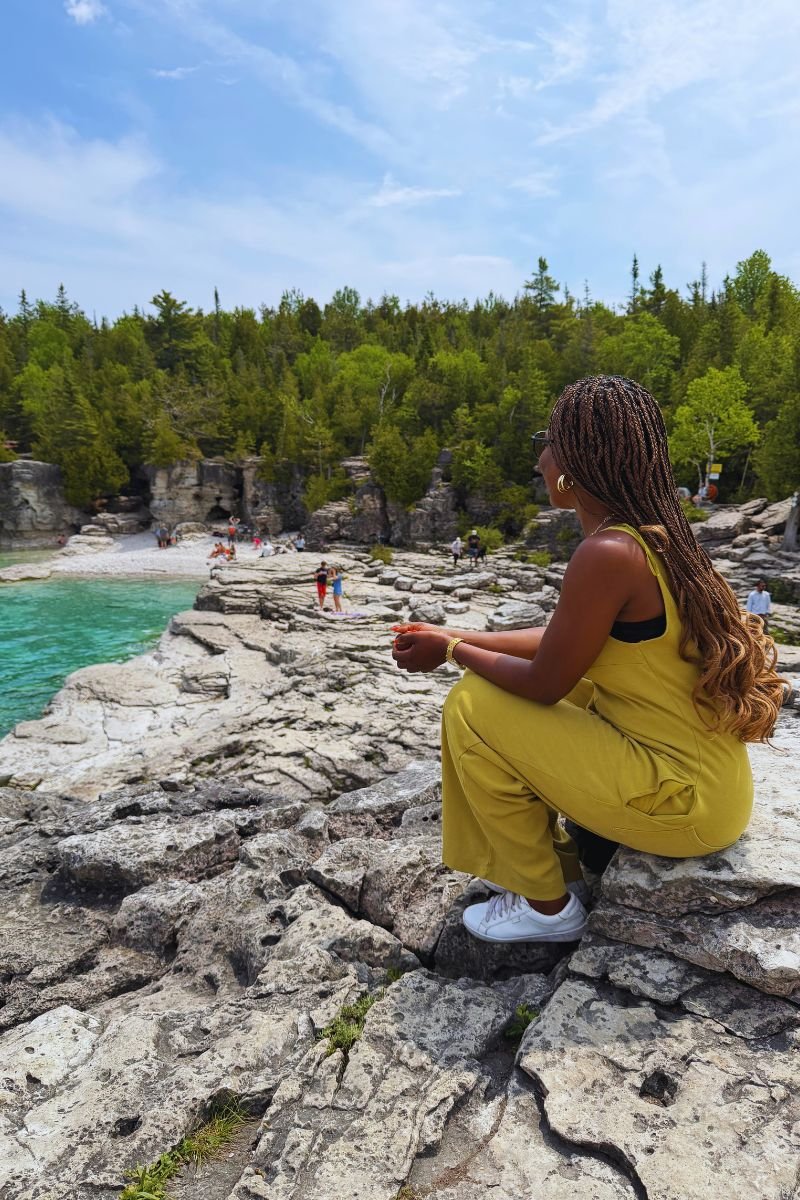
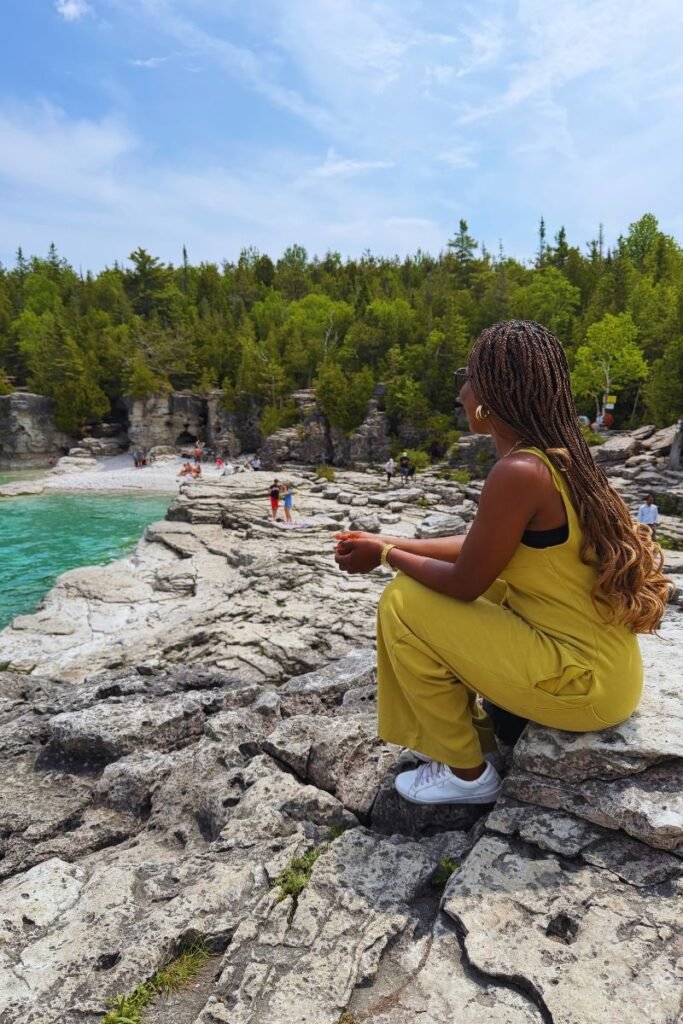
After visiting The Grotto, Indian Head Cove was a nice place to slow down before continuing the hike. Some people relaxed along the shoreline while others braved the cold water for a swim.
The water was far too cold for me, but it was fun watching everyone else jump in. Even if you don’t plan to swim, I’d still recommend spending a little time here before heading back.
The best part is that you don’t need a separate reservation to visit Indian Head Cove. It’s included with your parking reservation for The Grotto, making it an easy stop while you’re exploring this part of Bruce Peninsula National Park.
4. Visit the Natural Arch
A short walk from The Grotto is the Natural Arch, another stop that’s easy to add while exploring Bruce Peninsula National Park.
The arch stretches out over the turquoise waters of Georgian Bay and only takes a few extra minutes to reach from The Grotto. I almost walked past it, but I’m glad I didn’t. It ended up being one of my favourite viewpoints along the trail.
Since it’s part of the same walk as The Grotto and Indian Head Cove, it’s worth taking a few extra minutes to stop before heading back.
5. Visit Halfway Log Dump
Halfway Log Dump was one of the quieter stops during my time in Bruce Peninsula.
A short walk leads to a rocky shoreline overlooking Georgian Bay, where you’ll find the same clear turquoise water and limestone coastline that make this part of Ontario so distinctive. Compared with The Grotto, there were far fewer people here, making it easy to wander along the shoreline and stop for photos.
I visited later in the day, and it ended up being one of my favourite places to simply sit by the water and take in the views. It felt much more relaxed than some of the peninsula’s busier attractions.
If you’re looking for another scenic stop that doesn’t require a long hike, I’d definitely recommend adding Halfway Log Dump to your trip. If you have extra time, Boulder Beach is another nearby spot with a rocky shoreline and more views across Georgian Bay.
6. Spend Time at Cyprus Lake
Most people know Cyprus Lake as the starting point for the hike to The Grotto, but it’s worth spending a little time here before or after your walk.
Surrounded by forest, the lake has a much calmer feel than the rocky shoreline of Georgian Bay. During my visit, people were swimming, paddling, and relaxing by the water, while others were setting off on the nearby hiking trails.
Cyprus Lake Campground is also located here, making it a convenient base if you’re planning to spend a few days exploring Bruce Peninsula National Park.
Even if you’re only visiting for the day, it’s a nice place to take a short break before continuing to your next stop.
7. Hike the Bruce Trail
If you enjoy hiking, you’ll probably find yourself on the Bruce Trail at some point during your visit.
Several of Bruce Peninsula’s best-known attractions, including The Grotto, Indian Head Cove, and Halfway Log Dump, are reached using sections of the trail. Along the way, you’ll walk through cedar forests, follow the limestone cliffs, and come across some of the best views over Georgian Bay.
I hiked several sections during my visit, and each one felt a little different. Some walks were short and easy, while others were more challenging, but every trail offered something different along the way.
Rather than listing every hike here, I’ve put together a separate guide covering my favourite hikes in Bruce Peninsula, including trail lengths, difficulty levels, and the ones I’d recommend if it’s your first visit.
8. Take a Boat Tour / Cruise Through Fathom Five National Marine Park
Seeing Bruce Peninsula from the water was one of the highlights of my trip.
I joined a sightseeing cruise from Tobermory, and it gave me a completely different view of Fathom Five National Marine Park. From the boat, we passed rocky islands, limestone cliffs, and several of the shipwrecks that lie beneath the clear waters of Georgian Bay.
What surprised me most was just how clear the water was. Even from the boat, it was easy to see below the surface in many places.
Several companies operate sightseeing cruises from Tobermory, including trips that stop at Flowerpot Island. If you’re visiting during the summer months, I’d recommend booking in advance because tours can sell out quickly. Parks Canada maintains a list of licensed tour operators, including Bruce Anchor Cruises and Blue Heron Cruises.
9. Visit Flowerpot Island
Flowerpot Island is one place I wouldn’t skip when visiting Bruce Peninsula.
Reached by boat from Tobermory, the island is famous for its flowerpot-shaped rock formations, but there’s plenty more to see once you step off the boat.
After seeing the flowerpots, I continued along the island’s trails to the historic lighthouse and several viewpoints overlooking Georgian Bay. Walking a little farther from the main viewing area made a big difference, as the trails became much quieter.
If you have enough time before your return boat, continue to Devil’s Monument, another impressive rock formation on the island. Since many visitors stay close to the flowerpots, it’s worth exploring a little farther before making your way back to the dock.
10. Explore Tobermory
I stayed just outside Tobermory, about a 15-minute drive from the harbour, and it made a great base for exploring Bruce Peninsula. Tobermory is the gateway to Flowerpot Island, Fathom Five National Marine Park, and the Chi-Cheemaun Ferry, so I found myself driving into town almost every day.
Once you’re in the harbour area, everything is within walking distance. It was easy to browse the local shops, stop for an ice cream, or relax on one of the waterfront patios without needing to move the car.
After a day of hiking, I enjoyed returning to the harbour to watch the boats come and go. During the summer months, many of the restaurants and pubs have live music in the evenings, giving the waterfront a lively atmosphere.
Enjoy Dinner at Shipwreck Lee’s
After a full day outdoors, Shipwreck Lee’s was exactly what I was looking for. It’s best known for its all-you-can-eat fish and chips, and I can see why it’s so popular.
Stop by Tobermory Brewing Company
I also stopped by Tobermory Brewing Company for drinks after a day of exploring and really enjoyed the relaxed atmosphere. If you enjoy trying local craft beers, it’s worth adding to your evening plans.
Looking for another way to experience Tobermory? Guided kayaking and hiking tours are a great way to explore the coastline around Fathom Five National Marine Park.
Treat Yourself at The Sweet Shop
Before leaving town, stop by The Sweet Shop for an ice cream. It quickly became part of my routine after a day of exploring and was the perfect way to end an afternoon around the harbour.
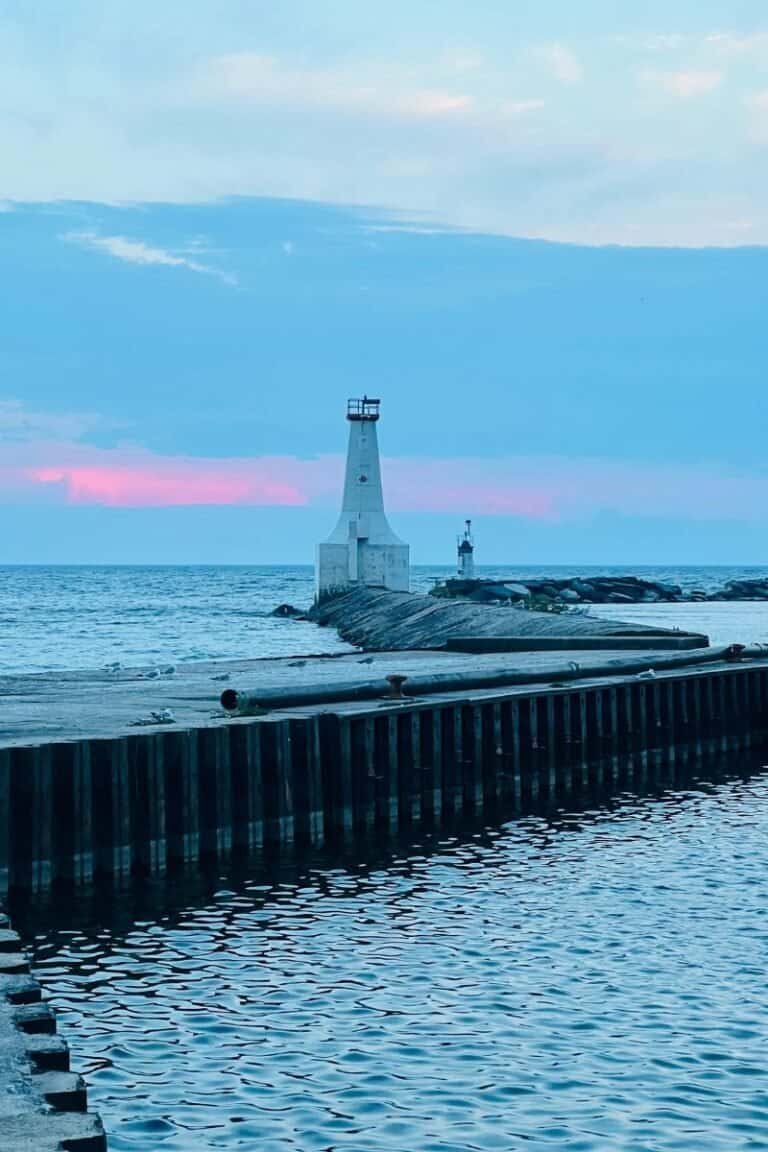
11. Visit Big Tub Lighthouse
Just a few minutes from downtown Tobermory, Big Tub Lighthouse is an easy stop while exploring the area.
I visited around sunset before heading back into town, and it was one of the quieter places I visited that day. Watching the light change over Georgian Bay made it a lovely way to end the evening.
The lighthouse sits on the edge of Big Tub Harbour, which is also known for its exceptionally clear water and historic shipwrecks resting below the surface. Even if you’re only stopping for a few minutes, it’s worth adding to your Tobermory itinerary.
12. Hike to the Lion’s Head Lookout
The hike to Lion’s Head Lookout was one of the most challenging hikes I did during my time in Bruce Peninsula, but the views at the end made every step worth it.
The trail winds through the forest before reaching the cliffs overlooking the turquoise waters of Georgian Bay. It took me about two hours each way, so I’d set aside at least half a day for the hike. There are a few steep and rocky sections, so proper hiking shoes are definitely a good idea.
Standing at the lookout and taking in the views across Georgian Bay was one of those moments that made the hike feel worthwhile.
If you’re visiting during the busier months, remember that parking for the Lion’s Head trailhead must be reserved in advance, and spaces can fill up quickly.
Before or after your hike, spend some time exploring the village of Lion’s Head. It’s much quieter than Tobermory and has a small waterfront that’s perfect for a short walk or a picnic.
If you’re planning to do this hike, I’ve also put together a detailed guide covering the trail, parking, what to expect, and my tips for visiting.
13. Explore Greig’s Caves
Greig’s Caves ended up being one of the biggest surprises of my trip.
Unlike some of the peninsula’s more popular attractions, it was much quieter during my visit. A short walking trail takes you through a series of natural caves before leading to several lookouts over Georgian Bay.
While I enjoyed exploring the caves, the viewpoints were what really stood out. Looking out across Georgian Bay from the cliff edge was worth the visit on its own.
One thing I wish I’d known beforehand is that Greig’s Caves prefers cash for admission. I hadn’t brought any with me, but they kindly accepted an e-transfer instead. If you’re planning to visit, I’d still recommend bringing cash just in case.
I’d also suggest visiting earlier in the day, especially during the summer months, when there are fewer people and parking is easier.
14. Spend Some Time at Bruce Peninsula’s Beaches
One thing I didn’t expect before visiting Bruce Peninsula was just how many different beaches there were. If you’re anything like me, you’ll probably want to spend some time by the water between hikes. From smooth white stone beaches to long stretches of sand, each one offers something a little different.
If you’re wondering which beaches are worth visiting, I’ve shared my favourites, along with what makes each one unique, in my guide to the best beaches in Bruce Peninsula.
My Favourite Thing to Do in Bruce Peninsula
If I had to choose just one experience, it would be spending the day exploring Bruce Peninsula National Park.
Walking between The Grotto, Indian Head Cove, and the Natural Arch gave me some of my favourite memories from the trip. Seeing the turquoise water of Georgian Bay in person was something photos simply can’t capture.
I’m really glad I spent five days in Bruce Peninsula instead of trying to squeeze everything into a weekend. It gave me enough time to enjoy the well-known attractions, revisit a few places, and stop at quieter spots like Halfway Log Dump and Greig’s Caves without feeling like I had to rush to the next destination.
When I return, Bruce Peninsula National Park will be the first place I’ll head back to.
Where to Stay in Bruce Peninsula
If it’s your first time visiting Bruce Peninsula, I’d recommend staying in or near Tobermory. It’s the closest town to Bruce Peninsula National Park, Fathom Five National Marine Park, and the boat tours to Flowerpot Island, making it a convenient base for exploring the northern part of the peninsula.
I stayed in a beautiful Airbnb about 15 minutes from Tobermory Harbour, and it was a great place to come back to after a day of hiking. It was quiet in the evenings, but still close enough to drive into town for dinner, drinks, or a walk around the harbour.
Looking back, the only thing I’d do differently would be to spend a night or two in Lion’s Head as well, especially if I were visiting for a week. It would have cut down on some of the driving and made it easier to explore places like Greig’s Caves and the Lion’s Head Lookout without having to drive back and forth from Tobermory.
If you’re visiting during the summer, book your accommodation as early as you can. Hotels, campgrounds, and vacation rentals often fill up well in advance, especially on weekends.
Where to Stay in Tobermory
Go Camping in Bruce Peninsula National Park
If you’re planning to spend a few days in Bruce Peninsula National Park, camping is a great way to be close to many of the park’s hiking trails.
Cyprus Lake Campground is the park’s main campground and offers drive-in sites, with easy access to attractions like The Grotto, Indian Head Cove, and sections of the Bruce Trail. For a more remote experience, backcountry camping is also available at designated campsites within the park.
Camping is especially popular during the summer months, so reservations often fill up well in advance. If you’re hoping to stay overnight, it’s worth booking as early as possible.
How Many Days Do You Need in Bruce Peninsula?
Although it’s possible to visit Bruce Peninsula as a day trip, I wouldn’t recommend it. The drive from Toronto takes around four hours each way, so you’d spend almost as much time in the car as you would exploring.
1 Day
If you only have one day, spend it in Bruce Peninsula National Park. Visit The Grotto, Indian Head Cove, and the Natural Arch, then finish the day with a walk around Tobermory before driving home.
2 – 3 Days
A long weekend gives you enough time to explore Bruce Peninsula National Park, take a boat tour to Flowerpot Island, hike to Lion’s Head Lookout, and spend an evening in Tobermory.
4 – 5 Days
This is how long I spent in Bruce Peninsula, and I thought it was the right amount of time. It gave me enough time to visit the well-known attractions while also stopping at places like Greig’s Caves and Halfway Log Dump. I never felt like I was rushing through the itinerary, and there was still time to enjoy quieter moments around the peninsula.
6 – 7 Days
If you’re planning to spend a full week in Bruce Peninsula, I’d suggest splitting your stay between Tobermory and Lion’s Head. I based myself near Tobermory for five days, which worked well for exploring the northern part of the peninsula. Looking back, though, I wish I’d spent a night or two in Lion’s Head as well. It would have meant less driving and more time to explore places like Greig’s Caves, Lion’s Head Lookout, and the surrounding area.
Best Time to Visit Bruce Peninsula
There’s really no bad time to visit Bruce Peninsula, but the experience can be quite different depending on the season.
Spring
Late May and June are my favourite times to visit. I went in June, the week before summer, and it felt like the perfect time to explore. The weather was ideal for hiking, the trails weren’t overly busy, and it was much easier to book accommodation and parking than it is later in the summer.
Summer
Summer is the busiest time to visit Bruce Peninsula. It’s the best season for hiking, swimming, camping, and boat tours, but it’s also when places like The Grotto, Flowerpot Island, and Tobermory are at their busiest. If you’re visiting during this time, book your accommodation, parking reservations, and boat tours as early as possible.
Fall
Fall is a great time to visit if you’re mainly coming for the hiking. The forests begin to change colour, the temperatures are cooler, and there are generally fewer people than during the summer months.
Winter
Bruce Peninsula looks completely different in winter, but you’ll need to be prepared for snow and icy trails. Always check the latest trail conditions before heading out, and make sure you have the right gear if you’re planning to hike.
Frequently Asked Questions
Is Bruce Peninsula worth visiting?
Absolutely. From hiking and boat tours to beaches and small harbour towns, there’s enough to keep you busy for several days. After spending five days exploring the peninsula, I still left with places I’d like to return to.
Can you visit Bruce Peninsula as a day trip from Toronto?
You can, but I wouldn’t recommend it. The drive takes around four hours each way, leaving very little time to explore once you arrive. If possible, stay for at least two or three days.
Do you need to reserve parking for The Grotto?
Yes. During the busiest months, The Grotto requires a timed parking reservation, and spaces often sell out well in advance.
Is Flowerpot Island worth visiting?
Yes. The flowerpot rock formations are impressive, but don’t stop there. I also recommend walking to the lighthouse and, if you have enough time, continuing to Devil’s Monument before catching your boat back to Tobermory.
How many days do you need in Bruce Peninsula?
I’d recommend at least three days, although four or five days gives you enough time to explore the main attractions without rushing. If you’re planning a week, consider splitting your stay between Tobermory and Lion’s Head.
What is Bruce Peninsula known for?
Bruce Peninsula is known for The Grotto, Flowerpot Island, the Bruce Trail, turquoise water, limestone cliffs, and Bruce Peninsula National Park.
Can you swim at The Grotto?
Yes, although the water is cold, even in summer. During my visit, plenty of people went for a swim, but I was happy to admire it from the shoreline.
Is Bruce Peninsula free to visit?
No. Most visitors will need to pay Parks Canada admission fees, and some attractions, such as The Grotto, also require a parking reservation. Boat tours and camping have additional costs.
Do you need a car in Bruce Peninsula?
A car is the easiest way to explore the peninsula because many attractions are spread out. If you don’t drive, ParkBus and guided tours from Toronto are good alternatives.
When is the best time to visit Bruce Peninsula?
I visited in June, just before the summer rush, and thought it was the perfect time. The weather was ideal for hiking, the trails were quieter, and accommodation was easier to book than during peak season.